
The Vatican Launched a Catholic Stock Index. And Meta Made the Cut

Get Breaking News First!
Editor’s choice
-
The Vatican Launched a Catholic Stock Index. And Meta Made the Cut
-
What Is Hedging in Crypto? How Smart Traders Protect Their Positions
-
These 5 Market Crashes Changed Investing Forever
-

What Is DeFi? How Decentralized Finance Unlocks Financial Freedom
-
The Real Trader’s Guide to Crypto Market Orders
-
NFTs Explained for Beginners: Why Digital Ownership Actually Matters
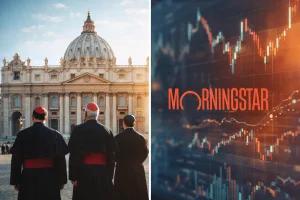
The Vatican has entered the stock market — not with symbolism, but with a formal equity index built around Catholic social teaching. In partnership with Morningstar, the Vatican Bank has launched two new benchmarks, and the top U.S. holdings include Meta, Tesla, Amazon, Nvidia, and Apple.
Faith and finance rarely share the same headline. This time, they do.
The Portfolio That Made People Blink

Here’s where people really started paying attention.
Join our community of 400K+ and never miss breaking news!
We respect and protect your privacy. By subscribing your info will be subject to our privacy policy . Unsubscribe easily at any time
The U.S. index is led by Meta, Amazon, Nvidia, Tesla, and Apple. Yes — those companies. JPMorgan, Visa, Broadcom, and Alphabet are right there too.
This isn’t a small, symbolic list. It’s the backbone of modern Big Tech and global finance.
The Eurozone version follows the same pattern. It includes semiconductor giant ASML, telecom operator Deutsche Telekom, software firm SAP, major banks like Santander and UniCredit, and insurer Allianz.
In other words, this isn’t a retreat from Wall Street. It’s Wall Street but with a moral filter applied.
When the Church looked at the Chart

image recreated for editorial purposes
Those names weren’t chosen at random.
Behind the surprise headlines sits something far more deliberate.
The Vatican Bank, formally known as the Institute for the Works of Religion, has rolled out two 50-stock benchmarks, one tracking U.S. companies and the other focused on the Eurozone. This isn’t a symbolic gesture. It’s the Church’s most structured attempt yet to define what faith-aligned investing looks like inside modern capital markets.
And it also reveals something people forget: the Vatican understands finance. In fact, it is widely speculated that the Vatican reportedly has more Bloomberg terminals per capita than anywhere else in the world.
How a Stock Makes the Cut — or Doesn’t

The key isn’t branding. It’s filtering.
These aren’t companies handpicked for looking virtuous. They’re large, established businesses that pass a defined moral screen. If a firm operates in sectors the Church excludes on ethical grounds including weapons manufacturing, abortion-related activities, adult content, or serious environmental violations, it’s out.
The Vatican isn’t blessing business models or endorsing management teams. It’s drawing boundaries and letting market weight do the rest. Once a company passes the screen, its size determines its influence in the index, just like any other benchmark.
This isn’t about finding saints, it’s about setting limits.
Join our community of 400K+ and never miss breaking news!
We respect and protect your privacy. By subscribing your info will be subject to our privacy policy . Unsubscribe easily at any time
Why This Quiet Launch Actually Matters

This isn’t just a symbolic move.
Indexes sit underneath huge pools of money. They influence how funds are built and how capital gets allocated over time. So when the Vatican creates its own framework, it’s not just making a statement, it’s inserting itself into that system.
And it’s doing it at a moment when traditional ESG investing is facing backlash and fatigue.
Whether these benchmarks turn into investable funds or not, the message is clear: values-based investing isn’t fading.
It’s being redefined.
📌 Final Thoughts
The Vatican didn’t try to beat the market. It tried to measure it, through a different lens. In an age where money moves faster than meaning, that might be the boldest play of all.
🔗 Stay updated on faith-based investing and global market moves with DayTrading.co
📊 Track Vatican index launches, top holdings, and ethical investing trends
💬 Join the conversation in our Telegram channel for real-time insights and analysis