


These 5 Market Crashes Changed Investing Forever

Get Breaking News First!
Editor’s choice
-

🔐 One Wallet for Everything Is How Most Traders Get Hurt. Here Is How Many You Actually Need
-

💰 Don’t Sell Your Bitcoin – Borrow Against It: The Best Platforms in 2026
-

MetaMask Who? The Web3 Wallets Traders Are Actually Using in 2026
-
💼 When Crypto Trading Becomes a Business: The IRS Rules Every Active Trader Needs to Know
-

₿ Why Local Businesses Are Taking Bitcoin Seriously in 2026
-

⚡ The Best of Both Worlds: How Hybrid Crypto Exchanges Are Changing the Way We Trade
Markets don’t crash randomly. They crack after pressure builds, when borrowing gets excessive, optimism runs too hot, or risks get ignored for too long.
From 1929 to 2020, five major collapses didn’t just wipe out trillions. They forced new rules, new safeguards, and new ways of thinking about risk.
Every crash leaves a scar. And every scar changes the market that comes next.
Join our community of 400K+ and never miss breaking news!
We respect and protect your privacy. By subscribing your info will be subject to our privacy policy . Unsubscribe easily at any time
1929 – The Crash That Exposed Leverage

The 1929 collapse didn’t begin with panic, it began with borrowed money.
Investors were buying stocks on margin, putting down a fraction of the cost and borrowing the rest. As prices climbed, confidence climbed with them. Everyone believed the gains would continue.
But they didn’t.
When prices started falling, margin calls forced investors to sell. Selling triggered more selling. What began as a correction turned into a collapse.
The market ultimately fell nearly 90%.
The aftermath reshaped Wall Street. New disclosure rules followed. The Securities and Exchange Commission was created. Leverage was no longer treated as harmless fuel, it was recognized as accelerant.
1987 – The Day Markets Fell 22%
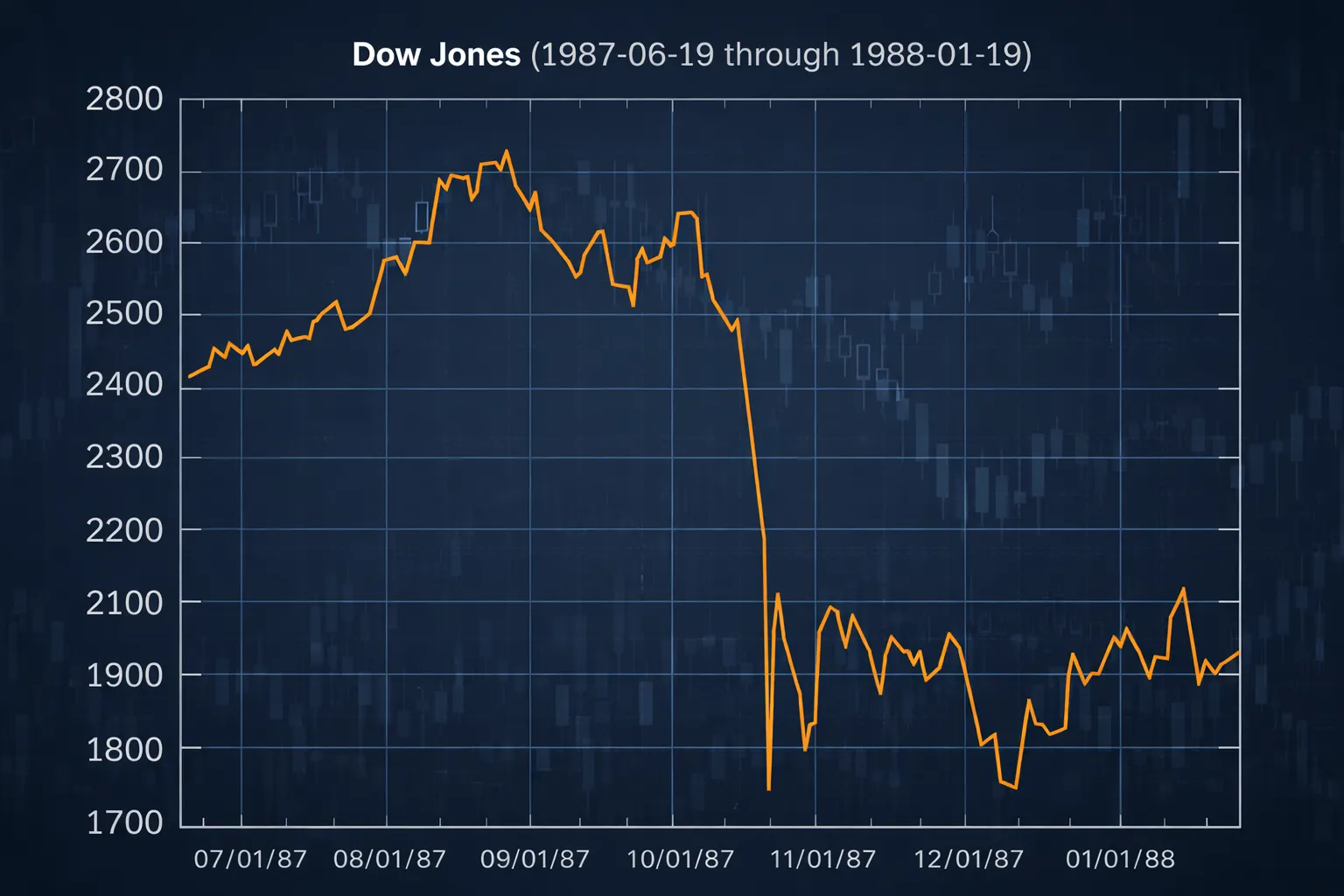
By 1987, markets had become faster and more automated.
On Black Monday, the Dow fell more than 22% in a single session. There was no deep recession underway. The collapse was automated.
Computer-driven strategies were programmed to sell as prices dropped. So once the slide began, those programs accelerated it. And selling triggered even more selling.
Afterward, regulators introduced circuit breakers, automatic trading pauses meant to prevent that kind of freefall from happening again.
2000 – The Dot-Com Crisis

The dot-com crash followed years of enthusiasm around internet companies that promised growth without profits. Capital flowed freely into businesses with little revenue and no clear path to sustainability.
When expectations collided with reality, the Nasdaq fell nearly 80%, erasing roughly $5 trillion in value. The episode reinforced a core lesson: innovation does not eliminate the need for earnings.
2008 – When Hidden Risk Surfaced

The problem in 2008 wasn’t visible at first.
Banks had packaged risky mortgages into products that looked safe. Those products were sold everywhere, across institutions, across countries.
When homeowners began defaulting, the weakness spread fast.
What seemed like a minor setback became a major catastrophe. Major banks failed. Credit markets froze. Stocks lost more than half their value.
Join our community of 400K+ and never miss breaking news!
We respect and protect your privacy. By subscribing your info will be subject to our privacy policy . Unsubscribe easily at any time
This time, it wasn’t hype or speed, it was hidden leverage running through the entire financial system.
Afterward, regulators tightened capital rules, forced stress tests, and gave central banks a larger role in preventing collapse.
2020 – The Fastest Collapse
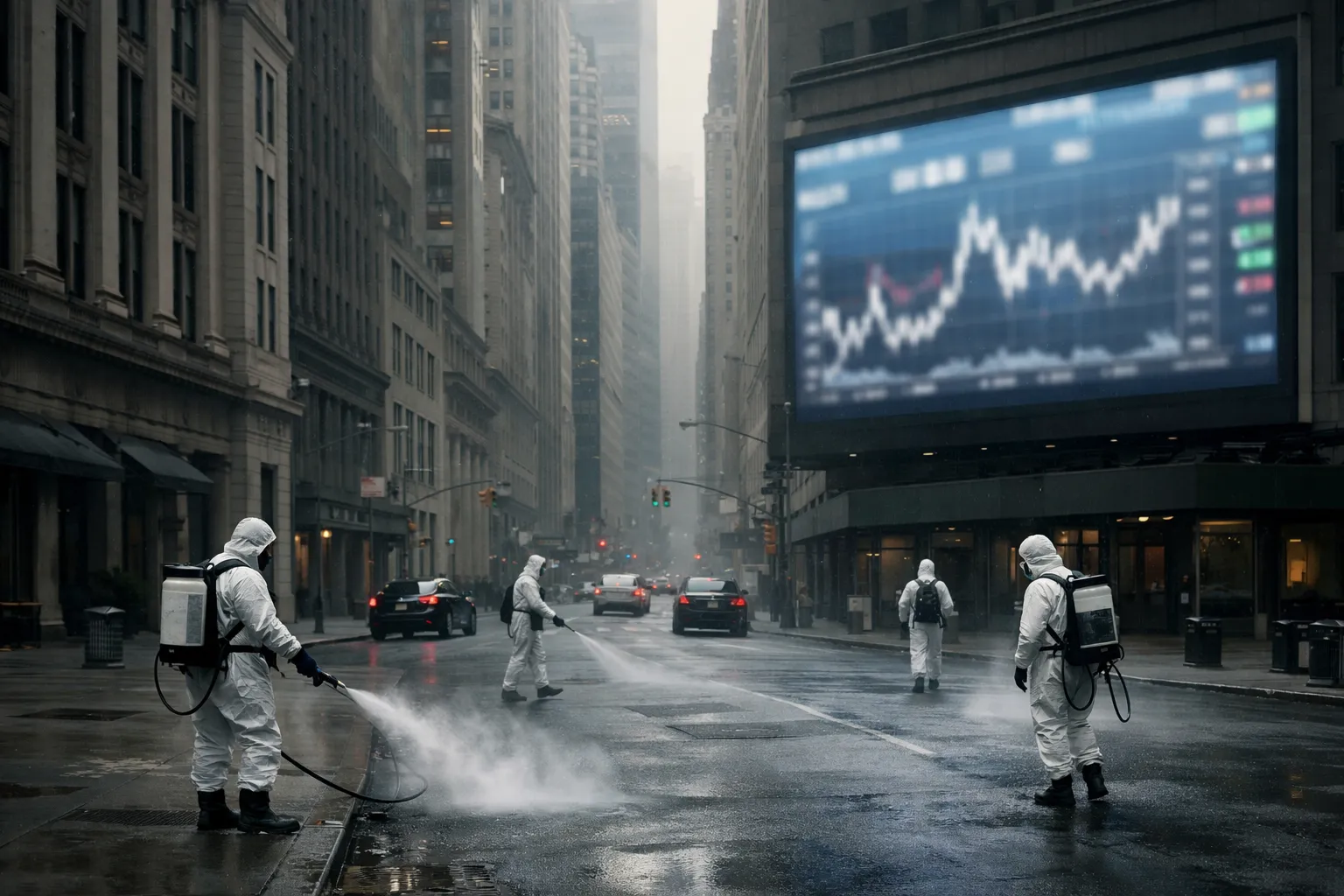
In 2020, markets faced a shock unlike any before. A global pandemic forced economies to shut down almost overnight. Stocks plunged 34% in weeks, oil prices briefly turned negative, and liquidity vanished.
The speed was the shock.
Then came the response. Governments and central banks unleashed massive stimulus almost immediately. Liquidity returned just as fast as it disappeared.
The lesson was clear: markets now move quickly, and policy moves just as quickly to catch them.
The Pattern Behind Every Crash
None of these crashes were random. Each one followed a familiar pattern. Confidence grew. Risk piled up quietly. Then something snapped.
The trigger was different every time: leverage in 1929, automation in 1987, hype in 2000, hidden risk in 2008, shock in 2020. But the structure was the same.
When fragility builds beneath the surface, it only takes one catalyst to expose it.
Every crash reshapes the system that follows. The only question is what risk is building now?
🔗 Stay abreast of financial history and market trends
📊 Track key economic indicators, market movements, and recovery patterns on DayTrading.co.
💬 Join the conversation in our Telegram channel for real-time insights.
📰 Stay updated with MSN for the latest market stories.