


The Ultimate U.S. Crypto Tax Playbook: Report Gains, Income & Airdrops Like a Pro

Get Breaking News First!
Editor’s choice
-

Chevron Is the Only U.S. Oil Major Still in Venezuela and It Could Be Cashing In Big
-

Most Traders Use ChatGPT Wrong — These 7 Prompts Fix That
-

BREAKING: U.S. Eyes Venezuela’s $60B Bitcoin Hoard
-

Wrapped Bitcoin (wBTC): Making Bitcoin Work on the Ethereum Network
-

Why Crypto’s Having a Terrible, Horrible, No Good, Very Bad Month
-

2026’s IPO Lineup Is Getting Dangerous
Every trade you make, every sat you stake, Uncle Sam’s watching. And with IRS enforcement ramping up, sloppy record‑keeping or ignorance won’t cut it anymore.
This isn’t just about avoiding audits. It’s about building a compliant portfolio that doesn’t blow up at tax time. Whether you’re flipping memecoins, stacking staking rewards, or sitting on an airdrop windfall, this guide breaks down exactly what you owe, when, and how to report it.
Let’s get tactical.
Join our community of 400K+ and never miss breaking news!
We respect and protect your privacy. By subscribing your info will be subject to our privacy policy . Unsubscribe easily at any time
💸 The Crypto Tax Events That Actually Matter
The IRS treats crypto as property, not currency. That means every trade, swap, or payment counts—and it’s likely taxable.
Here’s what really triggers tax:
Selling crypto for fiat (e.g., BTC → USD)
You’ve disposed of an asset.
🔄 Trading crypto for crypto (e.g., ETH → SOL)
Yes, it’s taxable, even without touching fiat.
You’re selling ETH, buying SOL. If ETH gained value, you owe. This one trips up a lot of DEX degens because no fiat changed hands; they assume it’s tax-free. Nope. The IRS sees everything.
🛍️ Spending crypto (e.g., paying rent or buying coffee)

It’s still a disposal. That $4 latte paid in BTC is taxable if BTC gained.
The IRS doesn’t care if you used it for cappuccino or a car. As long as you used BTC it’s a taxable sale. (Insane? Maybe. But that’s the game.)
🎨 Selling NFTs or digital collectibles
NFTs follow capital gains rules, but collectibles may face 28% tax, not 20%.
It depends on how the IRS classifies your JPEG.
🎁 Gifting crypto
Not a taxable event for you (the giver), unless you gift more than the annual exclusion ($18,000 in 2024). But the recipient inherits your cost basis, so when they sell, they carry your original gain/loss potential.
💀 Inheriting crypto
A rare “win” in tax terms—step-up in basis applies. Heirs use the value at time of death, wiping unrealized gains. If you’re eyeing low-tax havens, check our zero-tax country guide before you pack your bags.
🚫 Lost or stolen crypto
Lost your crypto to a hack or misplaced seed phrase? Tough luck—the IRS doesn’t allow deductions for lost or stolen assets, and if you didn’t sell before the loss, you could still owe taxes.
☔ Airdrops and yields
IRS doesn’t care if your airdrop went to $0. The moment you receive it, it’s taxed as ordinary income at its fair market value. This applies to staking rewards, mining proceeds, NFT royalties, DeFi yield, and LP rewards.
Join our community of 400K+ and never miss breaking news!
We respect and protect your privacy. By subscribing your info will be subject to our privacy policy . Unsubscribe easily at any time
📌 Bottom line: If your crypto changed form, hands, wallets, or use-case, it’s probably taxable.
Forms You’ll Actually Need
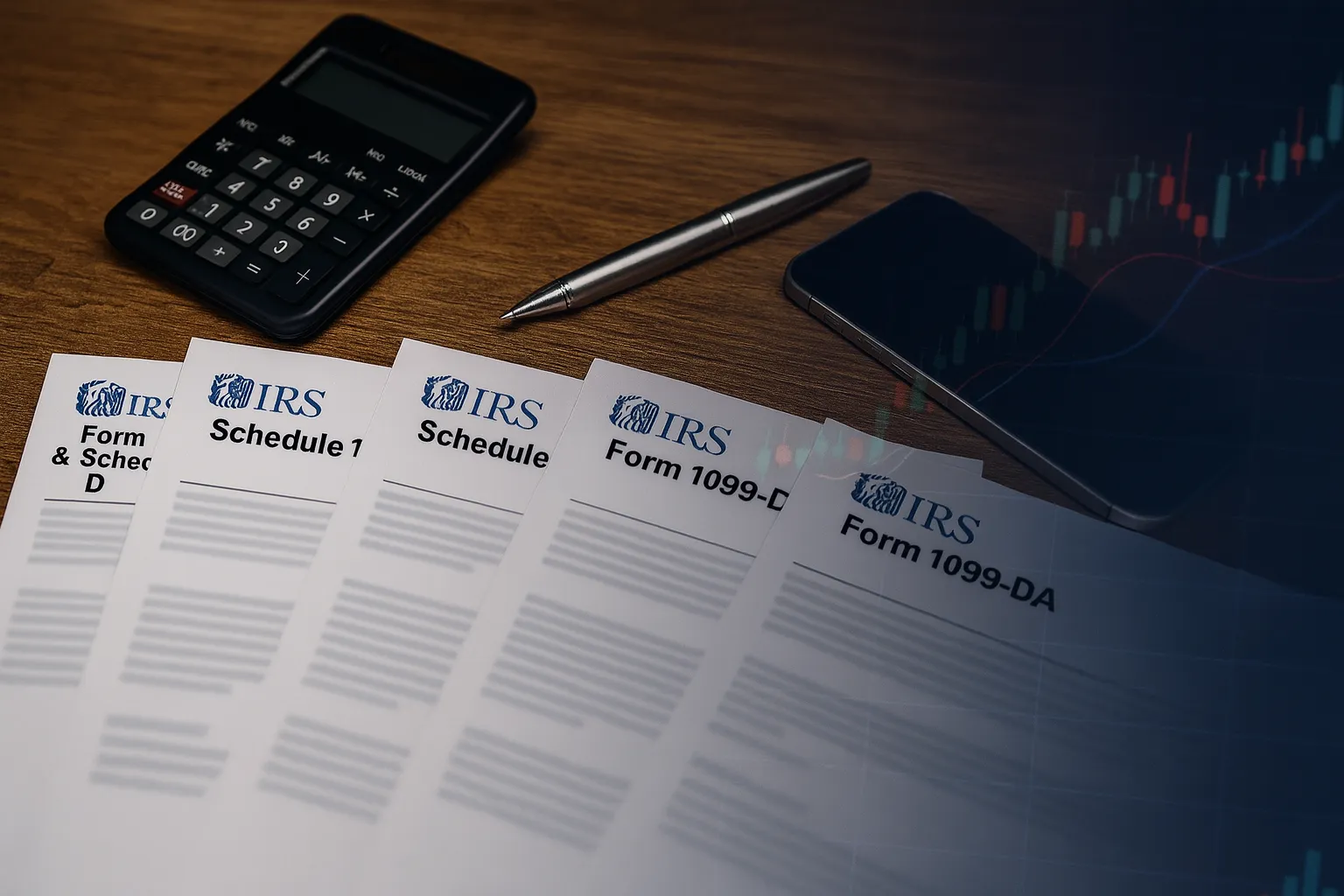
If you traded anything or received crypto in 2025, here’s what you’re filing:
And yes, you must answer “Yes” to the digital asset question on Form 1040 if you touched crypto. Don’t fudge it, because audits start there.
Keep Records or Get Rekt

Think you can just log into Coinbase and download a report? Maybe. But if you’ve moved funds across wallets, used DEXs, or bridged assets, you’re on the hook for every step.
You need:
Best way to survive this? Use tools like:
Bonus: If you’re earning serious yield, read our passive income hacks to structure that activity tax-smart.
Don’t Let Taxes Ruin Your Day
The IRS is staffing up and going digital. They’re looking for mismatches, ghost wallets, and “forgotten” DeFi bags.
Want to sleep easy while trading hard? Stay organized, file early, and let software handle the mess.
Also, subscribe to our weekly newsletter and join 20K+ traders in our Telegram community. Stay sharp, stay compliant, and never let taxes wreck your gains.