


Decoding the Crypto Order Book: A Trader’s Secret Weapon
Get Breaking News First!
Editor’s choice
-

🔐 One Wallet for Everything Is How Most Traders Get Hurt. Here Is How Many You Actually Need
-

💰 Don’t Sell Your Bitcoin – Borrow Against It: The Best Platforms in 2026
-

MetaMask Who? The Web3 Wallets Traders Are Actually Using in 2026
-
💼 When Crypto Trading Becomes a Business: The IRS Rules Every Active Trader Needs to Know
-

₿ Why Local Businesses Are Taking Bitcoin Seriously in 2026
-

⚡ The Best of Both Worlds: How Hybrid Crypto Exchanges Are Changing the Way We Trade
Most traders stare at price. Sharp traders stare at the order book. It’s the closest thing crypto has to X-ray vision – a live look at who’s buying, who’s selling, and where the next reaction is about to hit before it shows up on the chart. In a market that never sleeps, the order book is your earliest warning system.
Combine it with smart charting, like the basics in the candlestick charts guide, and you get a much clearer picture of the battlefield.
Here’s how to break it down and use it like a pro.
Join our community of 400K+ and never miss breaking news!
We respect and protect your privacy. By subscribing your info will be subject to our privacy policy . Unsubscribe easily at any time
What an Order Book Actually Shows

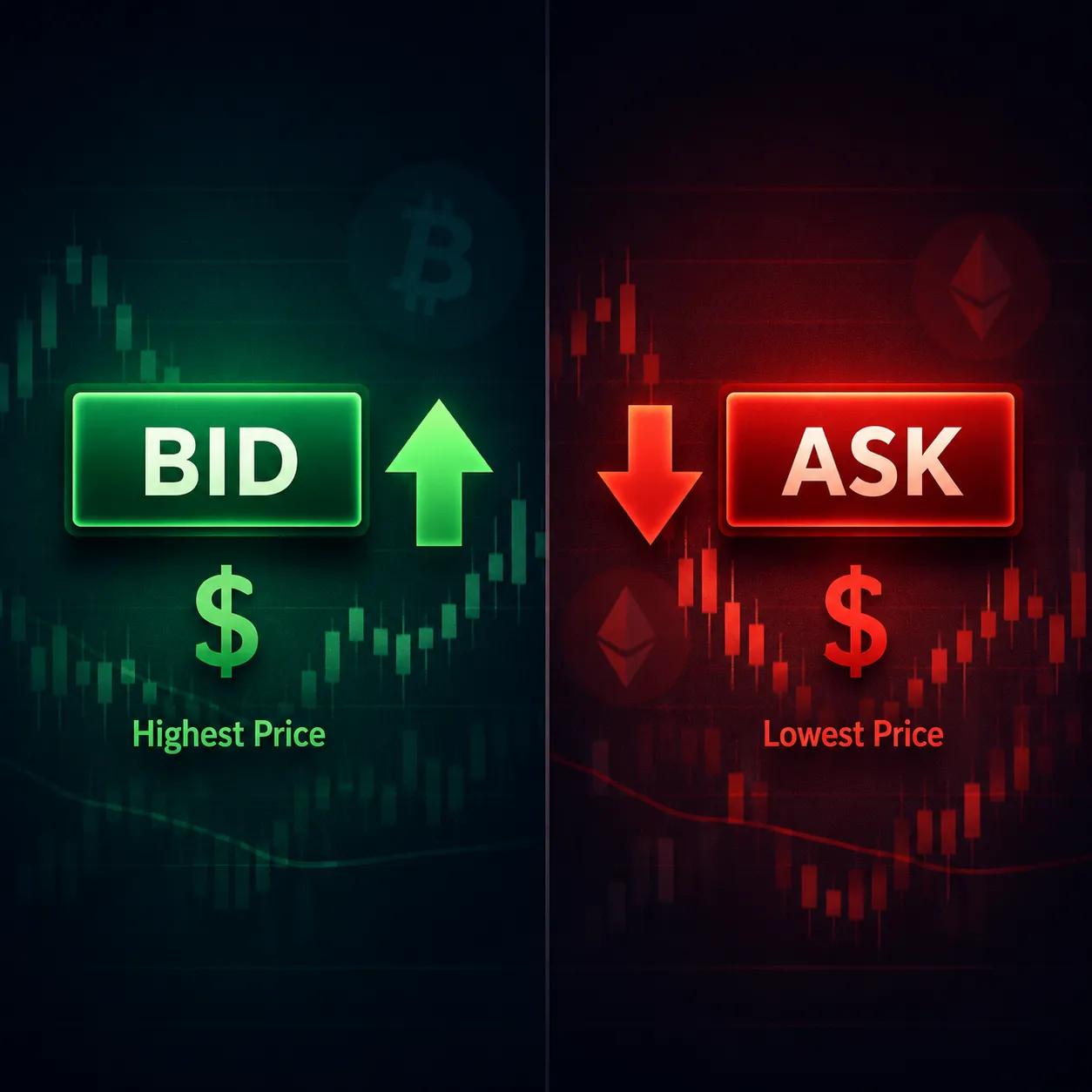
The order book is split into two sides:
- Bids: Buy orders waiting below the current price.
- Asks: Sell orders waiting above the current price.
Each level shows the price, the order size, and the total depth sitting at that zone. Think of it as layers of limit orders waiting to be filled. When price moves into those layers, they match and clear.
A thick book absorbs volatility. A thin book accelerates it. This is where concepts from crypto trading liquidity black holes come into play, since thin liquidity pockets often lead to violent swings.
How to Interpret Bids and Asks

Bids represent demand. Asks represent supply. The size sitting at each level usually tells you how serious traders are about defending or selling that zone.
Large Bid Clusters (Potential Support)
When you see heavy size stacked across multiple bid levels, it suggests traders are willing to absorb selling. This can act as short-term support. It doesn’t guarantee anything, but it signals interest.
Large Ask Clusters (Potential Resistance)
If you see thick sell layers above price, breakout traders may struggle until that liquidity gets eaten.
Walls don’t always hold though. Sometimes they’re real; sometimes they’re bait. If a wall disappears the moment price approaches, you’ve just seen a liquidity fake-out.
Identifying Support and Resistance

Support and resistance aren’t just lines on charts, they’re clusters of real buy and sell interest. The order book shows these clusters live.
This is where combining chart action with live liquidity really pays off. Traders who rely only on historical candles miss how quickly liquidity can shift. When both the chart and the book line up, levels get stronger – a core idea in our swing trading crypto guide.
Liquidity Gaps and Fast Moves

Crypto books in 2025 can shift quickly, especially during macro news spikes or sudden volatility rotations. If you notice shallow depth in a range, it only takes a small amount of size to move price several percent.
These gaps act like air pockets. Price slices through them because nothing is there to stop the move. This is the core idea that shows up a lot in liquidity black hole scenarios. Once the order book thins out, gravity takes over.
That chain reaction is exactly what the mechanics of stop-loss and take-profit orders are built around – smart traders map where the book is fragile before the move hits.
Fake Walls, Real Walls and Trader Psychology

Here’s the twist.
Not every big order is genuine. Some players spoof size to drag price into their preferred zone. You might see a huge 500 BTC bid appear, hold price for a minute, then vanish as soon as the market leans on it.
To filter noise, watch for time, consistency, and whether size refreshes after partial fills.
Trader psychology matters here too. When big groups get trapped, you often see layered orders appear as they try to defend their positions. This ties directly to bag holder psychology, where traders anchor themselves at bad entries and unintentionally create liquidity clusters.
Join our community of 400K+ and never miss breaking news!
We respect and protect your privacy. By subscribing your info will be subject to our privacy policy . Unsubscribe easily at any time
Using the Order Book for Practical Trading

Here’s where the tool becomes actionable:
The goal isn’t to predict the future. The goal is to trade with more awareness of who stands where and why.
Get the Competitive Edge; Join DayTrading
Once you understand the order book, your trading shifts from reacting to reading. You see where traders lean in, where they panic, and where the next move can accelerate long before it hits the chart. Stay sharp out there.
If you want weekly trader-grade insights, subscribe to the newsletter and join our Telegram with 20K traders refining their edge together.