

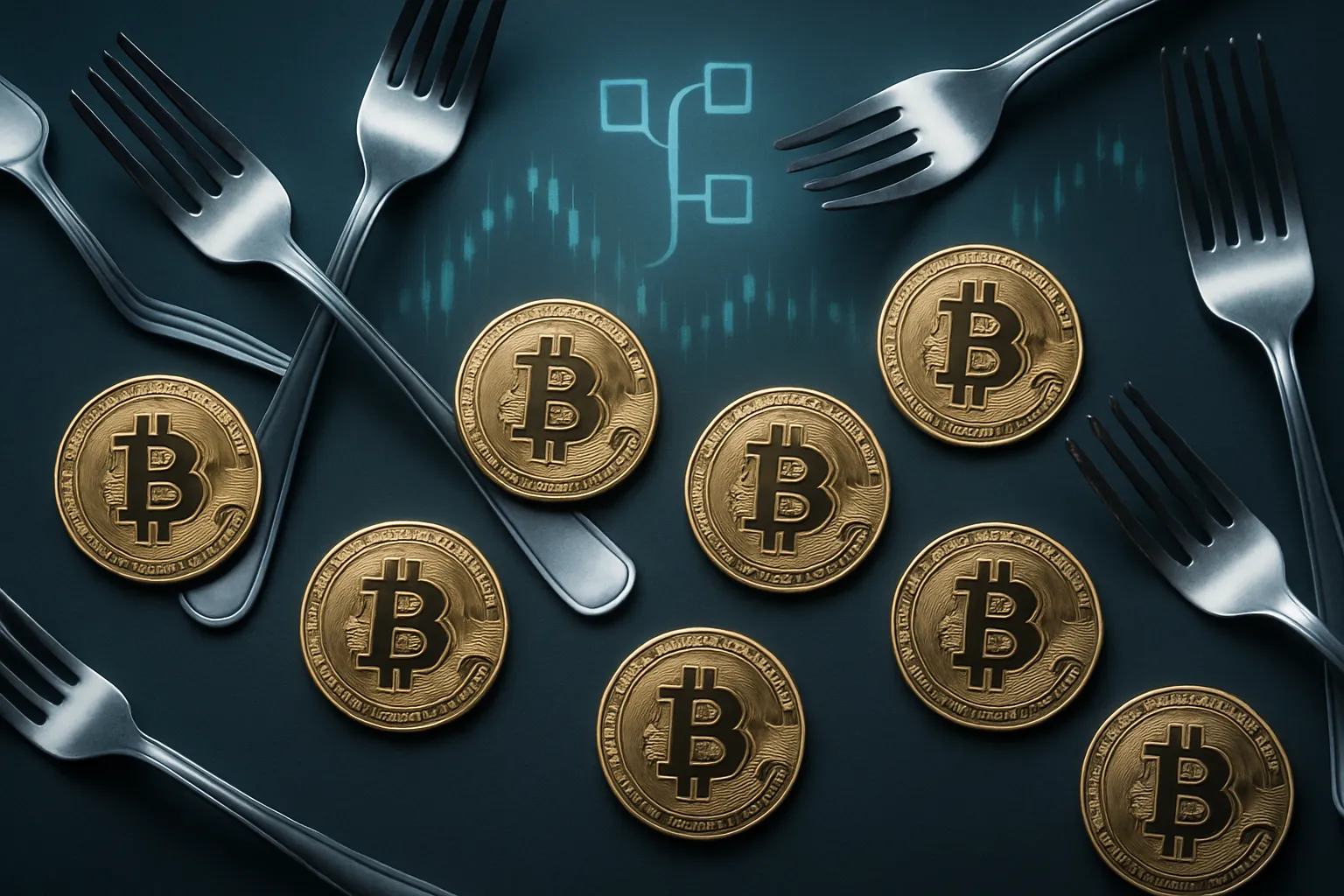
Hard Fork. Soft Fork: What the Fork?🍴
Get Breaking News First!
Editor’s choice
-

What Is DeFi? How Decentralized Finance Unlocks Financial Freedom
-
The Real Trader’s Guide to Crypto Market Orders
-
NFTs Explained for Beginners: Why Digital Ownership Actually Matters
-
How Crypto Scoring Really Works (And Why Rankings Matter More Than Hype)
-

The Rise of the Micro-Influencer in Web3
-
The 24/7 Market: How to Avoid “Crypto Burnout.”
“Hard fork” or “soft fork”? Sounds like kitchen talk, until one of them nukes your bags. 😬
These aren’t utensils; they’re blockchain split decisions that can double your coins or halve your confidence overnight.
Here’s how to tell them apart — before the next fork hits.
Join our community of 400K+ and never miss breaking news!
We respect and protect your privacy. By subscribing your info will be subject to our privacy policy . Unsubscribe easily at any time
🚨 What Is a Hard Fork?

Imagine your favorite restaurant splitting in two — same chef, but with two different menus. That’s a hard fork: a blockchain dividing into two separate networks that can’t talk to each other.
This “blockchain breakup” forces everyone to pick a side. Your assets remain intact, but now you’ve got two versions of the same crypto—each with different rules, miners, and communities.
A classic example is Bitcoin Cash’s high-profile hard fork from Bitcoin in 2017, sparked by a fiery debate over block size.
Hard forks are massive rule changes that old software can’t follow. They’re disruptive and demanding, but they also bring innovation and new market opportunities.
🔖 What Is a Soft Fork?

While hard forks split the blockchain family into separate households, soft forks are more like new house rules everyone agrees to — no one gets kicked out.
Think of it as a smartphone OS upgrade: older apps still run, but new features unlock for those who update.
With a soft fork, your blockchain gets nifty upgrades while maintaining backwards compatibility. A key benefit is that soft forks help implement enhanced security features while keeping the network stable.
You’ll see this in action with Bitcoin’s SegWit upgrade, which cleverly boosted block capacity from 1MB to 4MB without forcing everyone to update their software.
The beauty lies in its balance — only a majority of miners need to adopt the new rules. Old nodes keep running, blissfully unaware, while upgraded ones enforce the network’s stricter standards.
For traders, these upgrades often mean lower fees and faster confirmations — another quiet evolution shaping Bitcoin’s staying power. (You can see that shift reflected in our Bitcoin price forecast for 2025).
💡Why Forks Matter

Just as a skilled chef balances gentle simmering and intense heat to create something extraordinary, blockchains rely on forks to grow and adapt.
Forks aren’t just technical adjustments, they’re the backbone of blockchain innovation and security.
Join our community of 400K+ and never miss breaking news!
We respect and protect your privacy. By subscribing your info will be subject to our privacy policy . Unsubscribe easily at any time
They patch vulnerabilities while adding exciting new features that keep the network fresh and functional.
Take Bitcoin Cash’s fork, for example — it boosted block sizes from 1MB to 8MB, making transactions noticeably faster.
And when developers disagree on direction (which happens more often than you’d think), forks let them build independently without destroying the original chain. Through it all, users keep their cryptographic keys and control — ensuring their assets stay secure across upgrades.
🧨Key Differences Between Hard Forks and Soft Forks

| Aspect | Hard Fork | Soft Fork |
|---|---|---|
| Compatibility | Not backward-compatible. Creates two chains. | Backward-compatible. A single chain persists. |
| Community Impact | Splits into two communities and networks. | Keeps the community unified with upgrades. |
| Miner/User Requirements | Everyone must upgrade or stay on the old chain. | Majority upgrade; old nodes still function. |
| Examples | Bitcoin Cash (from Bitcoin) | SegWit upgrade (Bitcoin) |
🧊 Final Thoughts
Forks aren’t just technical events — they’re the plot twists that shape crypto’s evolution.
Each split, upgrade, or tweak carries ripple effects for traders, miners, and investors alike. Some spark new fortunes (hello, Bitcoin Cash), others fade quietly into GitHub history.
As 2025 unfolds, watch for the next big fork — because the projects that adapt fastest often lead the next bull run.
Don’t guess, trade like a pro. 🏆 Join 20k+ traders on Telegram for up-to-the-minute signals and subscribe to our newsletter for straightforward, insightful crypto analysis.