

Bitcoin Genesis Block: The Hidden Message That Launched Crypto
Get Breaking News First!
Editor’s choice
-
Bitcoin Genesis Block: The Hidden Message That Launched Crypto
-

The Vatican Launched a Catholic Stock Index. And Meta Made the Cut
-

What Is Hedging in Crypto? How Smart Traders Protect Their Positions
-

These 5 Market Crashes Changed Investing Forever
-

What Is DeFi? How Decentralized Finance Unlocks Financial Freedom
-

The Real Trader’s Guide to Crypto Market Orders
On January 3, 2009, Bitcoin went live.
No launch event. No marketing campaign. Just a single block mined by someone calling themselves Satoshi Nakamoto. That block, known as the Genesis Block, or Block 0, didn’t just start a blockchain. It launched a monetary experiment that’s still reshaping finance in 2026.
So what’s actually inside Block 0 — and why does it still matter?
Join our community of 400K+ and never miss breaking news!
We respect and protect your privacy. By subscribing your info will be subject to our privacy policy . Unsubscribe easily at any time
🚨 What Is the Bitcoin Genesis Block?

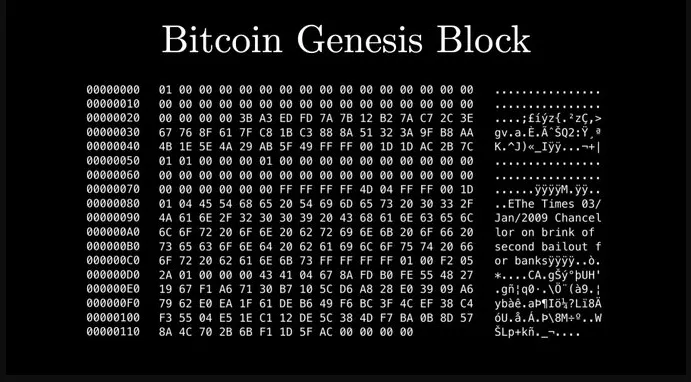
Image Source: Bitcoin.it
The Genesis Block is Bitcoin’s ground zero, block number 0 in the blockchain, created on January 3, 2009, by the mysterious Satoshi Nakamoto.
Unlike every block that followed, it doesn’t reference a previous block. There wasn’t one. This is where the chain begins. It also contained the first 50 BTC ever created. Those coins have never been spent and likely never will be.
More than just code, the Genesis Block marks the moment Bitcoin moved from theory to reality.
🔓 What Was the Hidden Message — and Why Did It Matter?

Buried inside Block 0 is a 77-character newspaper headline:
“The Times 03/Jan/2009 Chancellor on brink of second bailout for banks.”
It wasn’t random. The line served two purposes. First, it timestamped the block, proving it couldn’t have been created earlier. Second, it referenced the global financial crisis, at a time when banks were being rescued with public money.
Bitcoin didn’t launch in a vacuum. It launched as an alternative to the traditional finance system.
📌 Why the Genesis Block Matters Technically

Every Bitcoin block contains a cryptographic hash — a unique fingerprint — of the block before it. That’s what links individual blocks into a chain.
The Genesis Block is the starting reference point. It’s hardcoded into Bitcoin’s software, meaning every node on the network agrees that this is where history begins.
If someone tried to alter Block 0, its fingerprint would change. That would invalidate every block after it. The network would reject that altered chain immediately.
Without the Genesis Block, there is no reference point. Every block in Bitcoin traces back to it. Remove Block 0, and the entire chain stops making sense.
That shared origin is what makes Bitcoin’s history tamper-resistant.
Join our community of 400K+ and never miss breaking news!
We respect and protect your privacy. By subscribing your info will be subject to our privacy policy . Unsubscribe easily at any time
📊 Why It Still Matters in 2026

The Genesis Block isn’t just symbolic.
It anchors Bitcoin’s supply history. Every coin in circulation today traces back to that first block and the issuance rules defined at launch.
It also reinforces credibility. Early coins — including Satoshi’s massive dormant stash — are publicly visible and verifiable on-chain. That transparency matters. If those coins ever moved, markets would react instantly — something we explored in our breakdown of Satoshi’s $134B Bitcoin fortune and its potential market impact.
Block 0 is where that entire supply story begins.
🔖 Where Can You View the Genesis Block Today?

Image Source: Blockchain.com
Anyone can view the Genesis Block using a blockchain explorer, with sites like Blockchain.com.
Search for block height 0, and you’ll see the original block data, the embedded headline, and the 50 BTC reward that started it all.
✅ Final Thoughts
Block 0 didn’t just launch Bitcoin. It locked in the rules, the supply, and the integrity that still hold the system together today. Every block since is just an extension of that first one — and that’s why it still matters.
But the Genesis Block also locked in Bitcoin’s fixed supply.
When that final coin is mined, the rules don’t change. But the incentives do. Here’s what that means.
Level up with crypto’s elite. 🤝 Join 52k+ Telegram traders for live alerts and real talk. Our newsletter drops trusted insights weekly.