

From Resumes to Wallets: How Web3 Is Rewriting Professional Reputation

Get Breaking News First!
Editor’s choice
-

Lost Your Crypto? Here’s How Recovery Experts Try to Get It Back
-
These Crypto Newsletters Are Worth Your Time in 2026
-

Can Crypto Work Without the Internet? Here’s What Actually Happens
-
How DEXs Work: Inside Decentralized Crypto Trading
-

Rolex Makes $11 Billion a Year — And No One Owns It
-

Supermicro Co-Founder Arrested Over $2.5B Smuggling Case
Professional reputation has always been a trust game.
For years that trust lived in resumes, LinkedIn endorsements, and references who hopefully still remember working with you.
Web3 is experimenting with something different.
Instead of describing your achievements, your wallet can prove them. Hackathon wins, DAO governance activity, on-chain contributions — all recorded directly on the blockchain.
Join our community of 400K+ and never miss breaking news!
We respect and protect your privacy. By subscribing your info will be subject to our privacy policy . Unsubscribe easily at any time
The idea is simple: if reputation can be verified, it doesn’t have to be trusted.
🧨 Why Traditional CVs Just Don’t Work in Web3

While your résumé sits in a recruiter’s inbox claiming you “spearheaded blockchain initiatives,” there’s usually no way to prove you did more than forward a few crypto emails.
Traditional CVs run on trust. That “10-person team” you led? Unless someone checks, it’s mostly storytelling.
Web3 is testing a different idea: instead of describing what you’ve done, your wallet can show it through verifiable on-chain activity.
Platforms like Web3.bio already aggregate signals from DAO participation, GitHub commits, and other blockchain records, building identity graphs based on what you actually did, not just what you claimed.
🔖 Wallets Are Alive: Unbeatable Advantages
⚙️ Cryptographic Proof
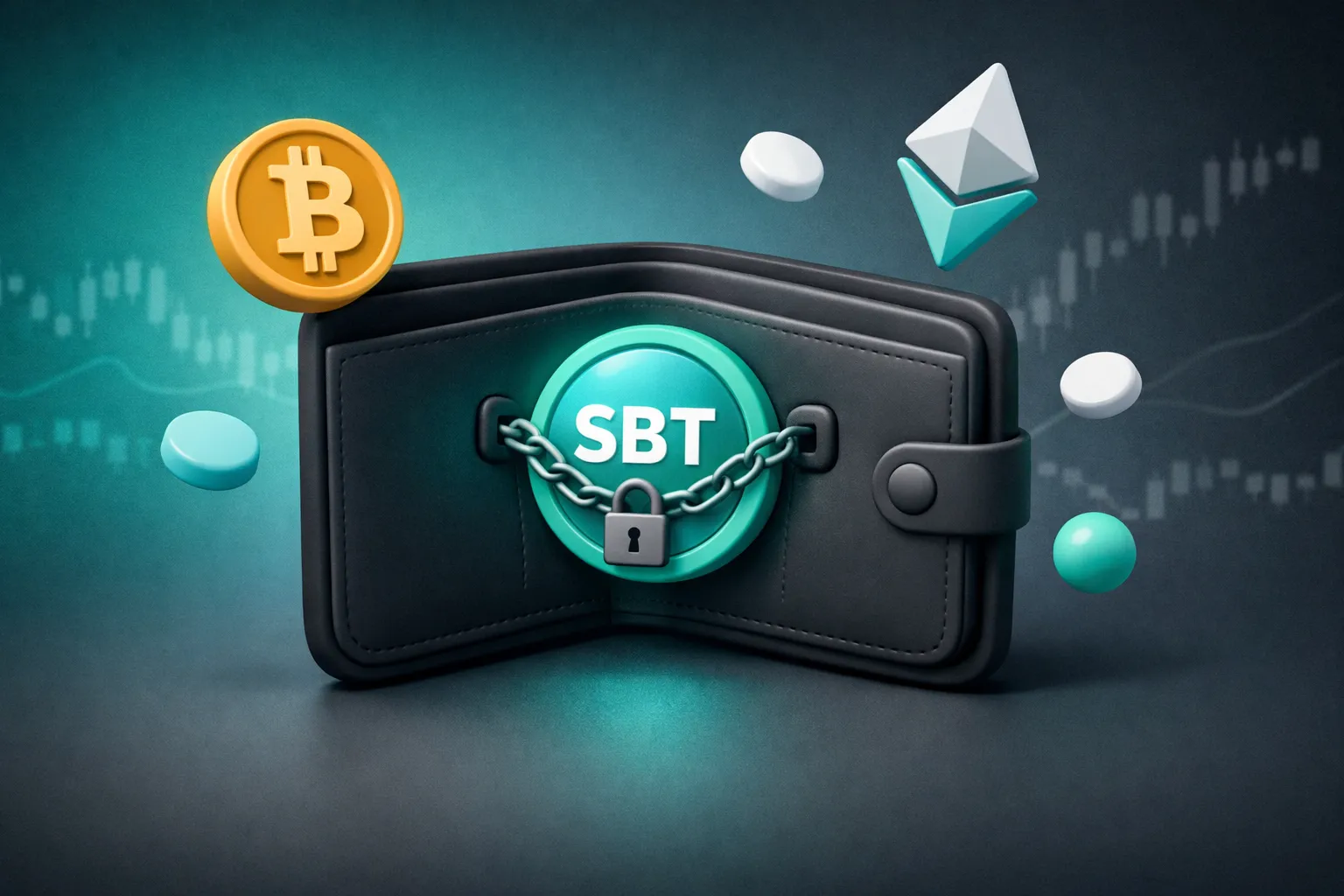
When someone says they shipped a smart contract, Web3 doesn’t have to rely on trust. Soulbound tokens attach that achievement directly to a wallet, creating a record anyone can verify on the blockchain.
Instead of trusting a line on a résumé, you’re looking at cryptographic proof tied to the address that earned it.
In other words, it’s a credential that can’t be edited or forged.
⚖️ Self-Sovereign
Because a platform can suspend your account on a random Tuesday and wipe out five years of connections overnight, the self-sovereign promise of Web3 identity hits differently.
In this model, your credentials live in your wallet, not on someone else’s platform. That means your reputation doesn’t disappear because a company changed its rules.
Even if the original issuer disappears, the credential itself can still be verified on-chain. Your professional history becomes something you carry with you, not something a platform hosts.
Join our community of 400K+ and never miss breaking news!
We respect and protect your privacy. By subscribing your info will be subject to our privacy policy . Unsubscribe easily at any time
✅ Live Updates
Your wallet functions like a living résumé that updates itself.
Deploy a smart contract, and the transaction appears on-chain with a timestamp and permanent record. Complete a hackathon and mint a soulbound token, and that credential instantly becomes part of your on-chain history.
Instead of manually updating profiles, your portfolio updates itself as it happens.
🧯 Selective Disclosure
Not every credential can be public. Security auditors, for example, often work under NDAs and can’t reveal the protocols they’ve reviewed.
Zero-knowledge proofs solve that problem. They let you prove a claim, like auditing dozens of contracts, without revealing the details.
It’s like showing a bouncer you’re over 21 without handing over your full ID. You’re mathematically demonstrating competence while protecting client confidentiality.
💡 From Chaos to Wallet Resume: Your 6-Step Migration

1️⃣ Map Your Activity: List your on-chain work: hackathons, DAO votes, Gitcoin bounties, GitHub commits.
2️⃣ Collect Proof: Save wallet receipts like Etherscan transactions, badges, forum posts, and governance records.
3️⃣ Choose a Hub: Use platforms like Web3.bio or RabbitHole to organize your wallet identity in one place.
4️⃣ Add Context: Raw numbers mean nothing.
“50 Uniswap swaps” → boring.
“Optimized 50 swaps and saved the DAO treasury $2,300” → valuable.
5️⃣ Make It Visible: Add the link to your bio, pin it on X, and share it in Discord.
6️⃣ Keep It Alive: Your wallet resume updates with every new contribution.
🚨 The Challenges Ahead

Before you mint your first SBT and declare LinkedIn obsolete, it’s worth slowing down for a second. Turning your wallet into a permanent professional record comes with trade-offs.
Privacy is the first one. When credentials live on-chain, parts of your professional history can become visible forever.
Adoption is another hurdle. Wallet onboarding is still confusing, and seed phrases alone scare many people away before they even complete their first transaction.
And there’s still no clear standard for what counts as credible reputation. Projects and DAOs issue different badges and SBTs, but the ecosystem hasn’t agreed on which ones actually carry weight.
📌 Final Thoughts
Resumes describe what you say you did. Wallets can show what you actually did.
The technology is still early and the standards are still evolving. But the direction is clear: reputation is slowly moving from profiles to wallets.
Ready to claim your portable proof? Here is how to set up your first crypto wallet without getting hacked.
Don’t trade blind.
💬 60k+ traders are discussing Web3 tools, wallets, and on-chain reputation shifts on Telegram. Join the conversation.
📩 Get the DayTrading newsletter for weekly breakdowns of the crypto systems quietly changing how markets work.
📰 Follow DayTrading.co on MSN for more deep dives into Web3, crypto, and the mechanics behind digital markets.