


💼 When Crypto Trading Becomes a Business: The IRS Rules Every Active Trader Needs to Know

Get Breaking News First!
Editor’s choice
-
💼 When Crypto Trading Becomes a Business: The IRS Rules Every Active Trader Needs to Know
-

₿ Why Local Businesses Are Taking Bitcoin Seriously in 2026
-

⚡ The Best of Both Worlds: How Hybrid Crypto Exchanges Are Changing the Way We Trade
-

The Taxman Cometh – Here’s How Smart US Traders Are Staying Ahead in 2026
-

Bitcoin vs Gold vs Silver: The 2026 Fight Over What’s Actually Scarce
-

🎟️ Your Ticket Is Now a Token: How NFT Ticketing Is Changing Live Events in 2026
The IRS does not care what you call yourself. It cares what you do, how often you do it, and whether you can prove it.
For active crypto traders, that distinction is worth understanding before tax season forces the conversation. Most traders file as investors by default and leave real deductions on the table without ever realizing it.
Here is how to know which side of that line you are actually on.
Join our community of 400K+ and never miss breaking news!
We respect and protect your privacy. By subscribing your info will be subject to our privacy policy . Unsubscribe easily at any time
📊 Investor vs. Trader: What the IRS Actually Sees
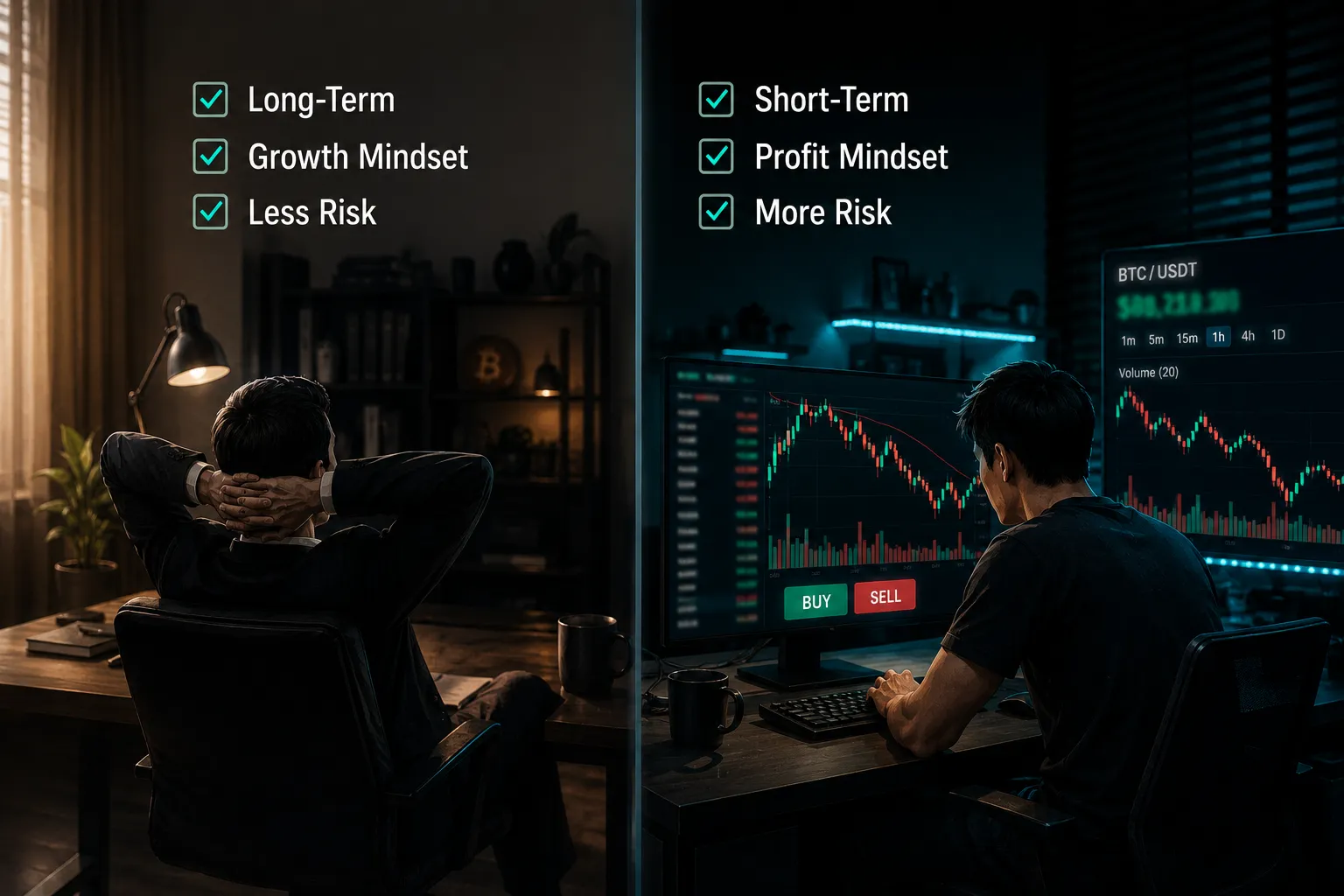
Most crypto participants are investors in the eyes of the IRS, even the ones checking charts every hour. The distinction is not about how often you trade. It is about whether your trading activity qualifies as a trade or business.
The IRS puts you in one of three boxes: investor, trader, or dealer. Dealers are market makers with actual customers, so not relevant here. The real distinction is between investor and trader.
Investors buy, hold, and profit from long-term appreciation. Traders buy and sell frequently with the intent of profiting from short-term price movements. The difference sounds simple, but the tax implications are not.
The category the IRS puts you in determines everything: which forms you file, which deductions you can claim, and how your losses are treated. Most people are investors by default. Moving into trader status requires meeting a specific set of criteria, and proving it if audited.
Understanding what the IRS already tracks is the right place to start before making any decisions about your filing status.
📋 IRS Criteria for Trader Tax Status: What Actually Qualifies
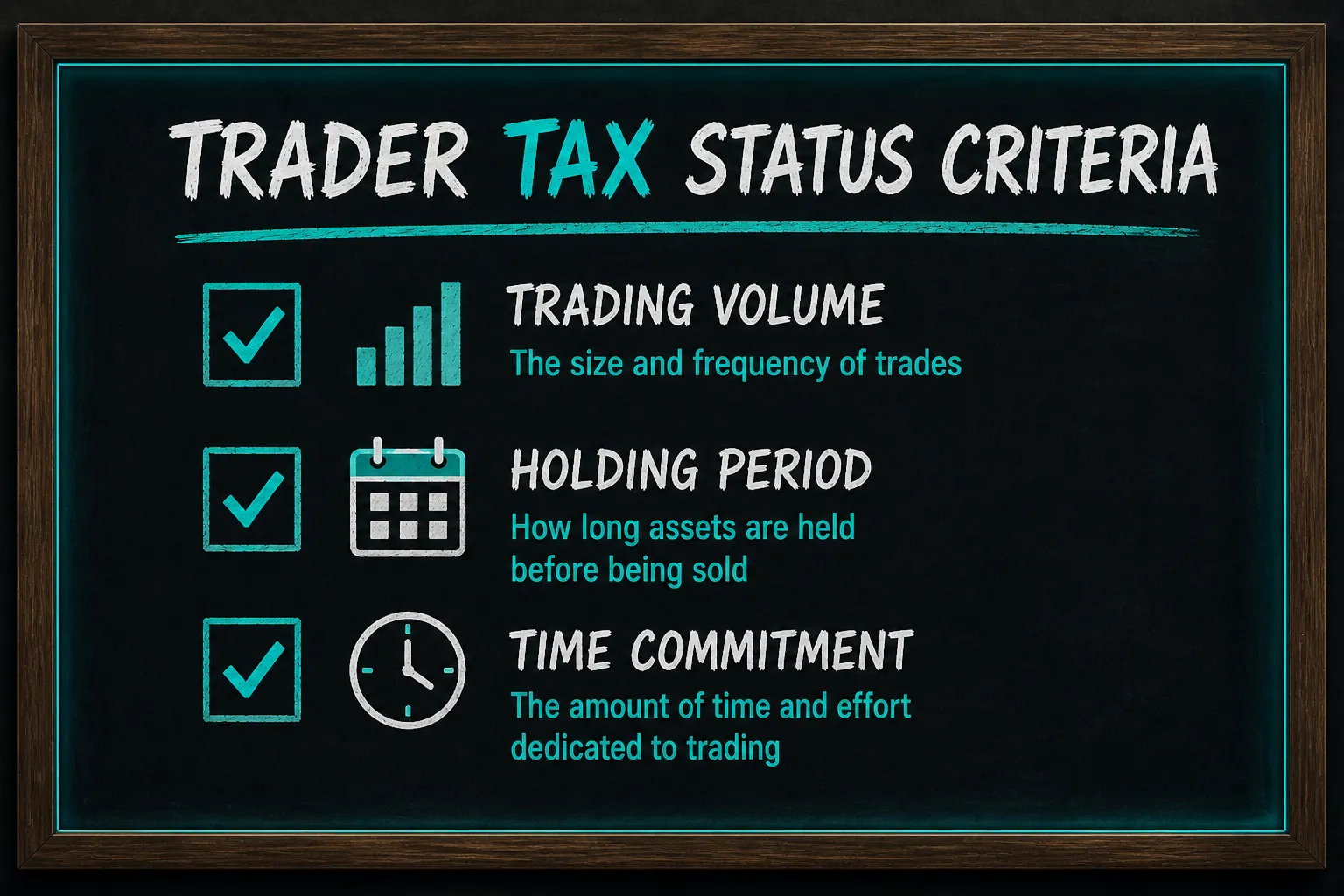
Wanting to qualify for Trader Tax Status and actually qualifying are two different things. The IRS does not offer a checklist, it looks at facts and circumstances. But there are some clear benchmarks that serious traders can measure against.
Volume: roughly 720 trades per year, 60 per month, four days per week. Each opening and closing transaction counts separately.
Holding period is the second. The IRS expects an average holding period of 31 days or less. Longer than that and the activity starts looking like investing, not trading.
Time commitment is the third test. If trading is something you do around a full-time job or squeeze into evenings, the IRS will likely see an investor, not a trader. It needs to occupy a meaningful portion of your day for the claim to hold up.
All three need to point in the same direction. Meeting one or two is not enough.
💰 What Trader Tax Status Actually Unlocks
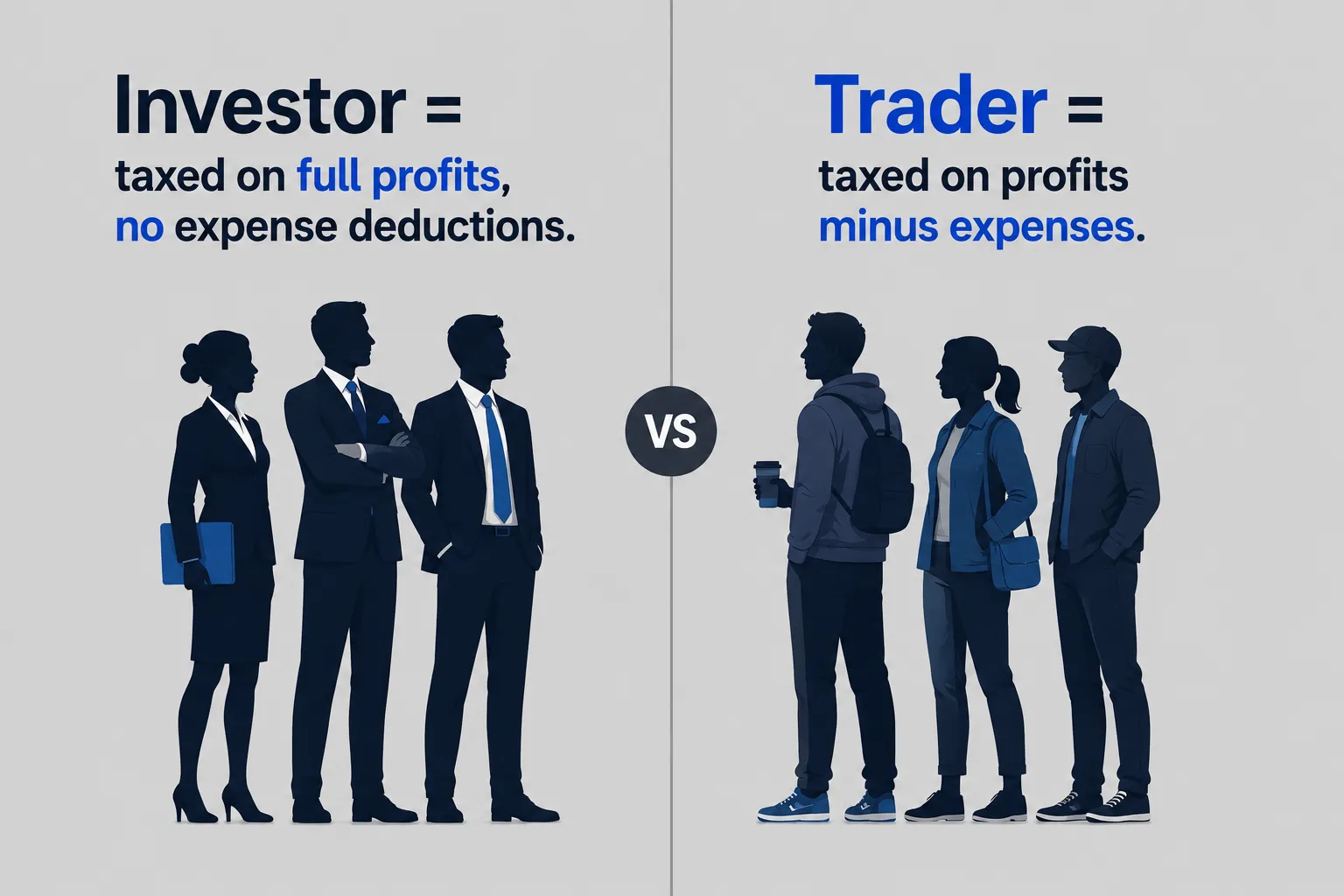
This is where it gets interesting. Traders who qualify can deduct expenses that regular investors simply cannot touch.
Data feed subscriptions, charting software, trading platforms, risk management tools, education costs, and home office expenses all become legitimate business deductions. Reported on Schedule C, these reduce your total taxable income, not just your trading gains.
Join our community of 400K+ and never miss breaking news!
We respect and protect your privacy. By subscribing your info will be subject to our privacy policy . Unsubscribe easily at any time
The difference between investor and trader treatment can run into tens of thousands of dollars annually for active traders. That is not a rounding error.
One thing worth knowing: trading commissions factor into cost basis, not deductions. The real value is in operational costs, and knowing exactly which ones qualify before you start filing makes a significant difference.
⚠️ The Mark-to-Market Election

Section 475(f) is the most powerful tool available to qualified traders, and the most unforgiving one on the list.
Electing Mark-to-Market means your gains and losses are treated as ordinary income at year end, not capital transactions. The wash sale rule disappears. Loss caps disappear. For traders who have had a brutal year, that distinction is worth serious money.
But the deadline is absolute. You have to file before the due date of your prior year tax return. Miss it and you wait another full year. No exceptions.
This is not something to figure out alone. Get a crypto-literate CPA involved before you touch Form 3115. The decision compounds over time in ways that are difficult to reverse.
💸 The Hidden Cost Most Traders Miss: Self-Employment Tax

Trader Tax Status comes with a tax bill most people do not see coming.
As a qualified trader, the IRS treats you as self-employed. That means self-employment tax on top of your regular income tax, which currently sits at 15.3% on net trading profits up to a threshold, and 2.9% beyond it. For traders chasing deductions without running the full numbers first, this can quietly erase the advantage.
Before pursuing TTS, model both sides of the equation, compare what you save in deductions versus what you owe in self-employment tax. For high-volume traders with significant operational costs, TTS still wins. For traders with modest expenses, the math may not work in your favor.
This is the conversation most crypto tax content skips. Running your numbers properly starts here.
📁 How to Document Your Way Into Trader Tax Status
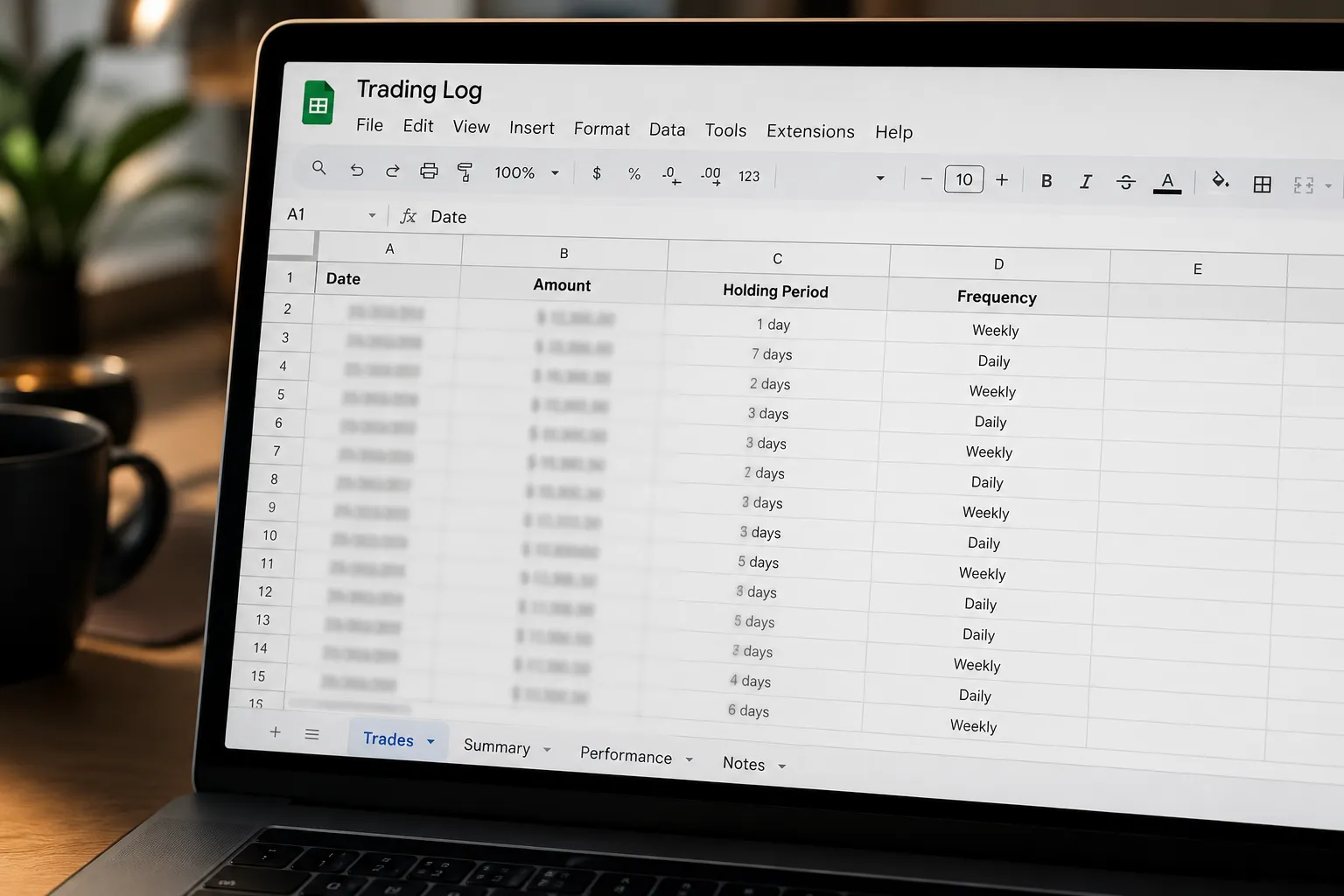
Qualifying for TTS and surviving an audit are two different problems.
At minimum, you need a detailed trade log which shows dates, amounts, holding periods, and frequency. Time logs showing hours spent trading each day matter more than most people realize. The IRS wants to see consistent, serious activity, not something that happened between other things.
Keeping trading activity in a dedicated account separate from long-term holdings is non-negotiable. Mixing the two weakens your claim significantly.
Serious traders also consider forming an LLC with an S-Corp election – it strengthens the business case and unlocks additional deductions like health insurance and retirement contributions.
🚫 When Trader Tax Status Is Not Worth Pursuing
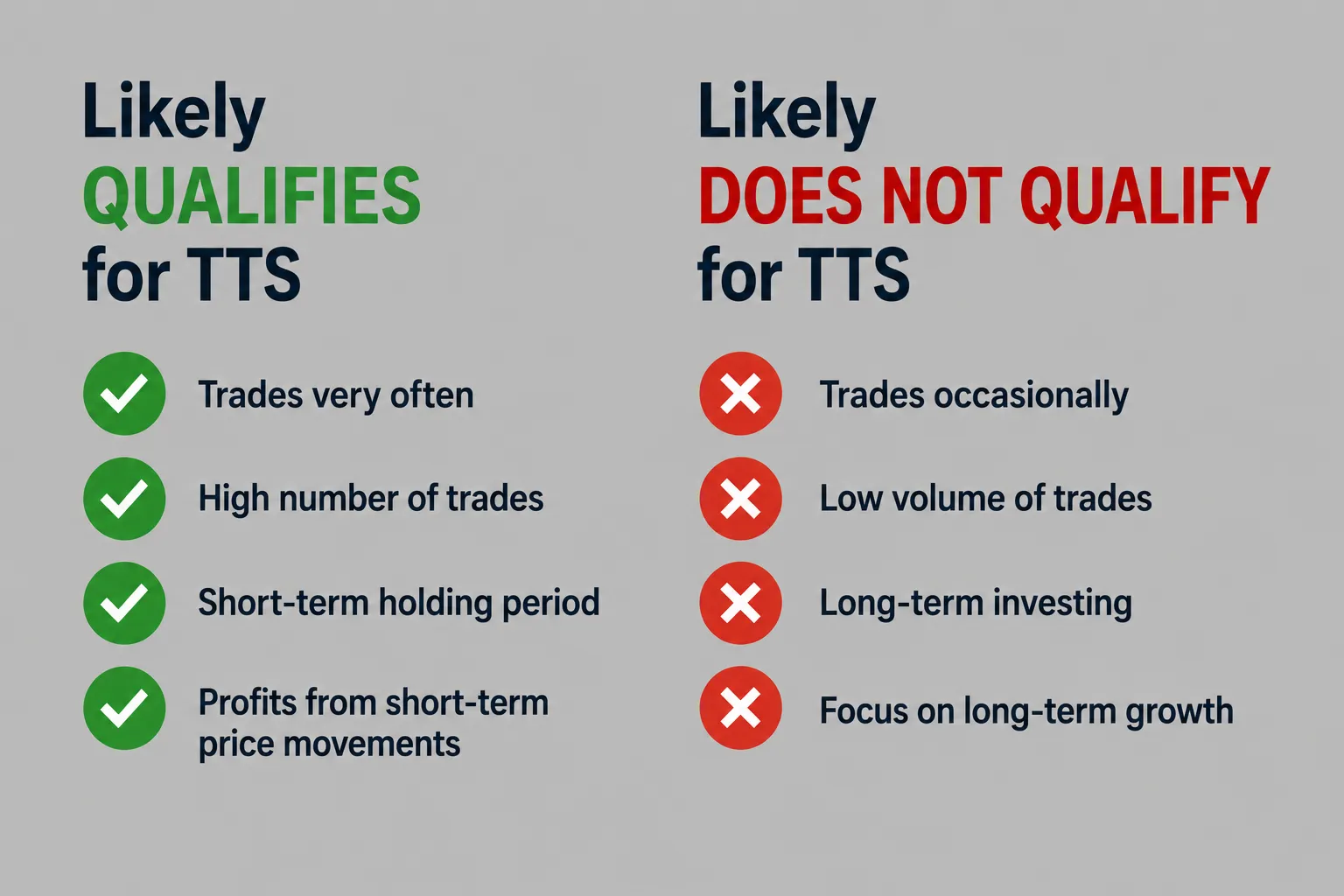
TTS is not for everyone, and pursuing it without genuinely qualifying is a fast way to attract IRS attention.
Part-time traders, those with a full-time job elsewhere, and anyone whose activity slows down for long stretches will struggle to make the case. Copy traders and those running automated systems face a similar problem. If you are not actively involved in strategy and execution, those trades may not count toward qualification at all.
The honest question is whether the deductions outweigh the additional tax burden and filing costs. For high-volume traders, yes. For everyone else, optimizing within investor status is often the smarter move.
🎯 The Bottom Line
Trader Tax Status is a legitimate and powerful tool, but only for traders who genuinely qualify. The IRS is paying closer attention to crypto activity in 2026 than it ever has, and the window for sloppy filing is closing fast.
If your trading volume, frequency, and time commitment meet the bar, this conversation belongs on your calendar before the next tax year ends.
For weekly insights delivered straight to your inbox, subscribe to the DayTrading.co newsletter.
Already in? 62,000 traders are having real-time conversations on our Telegram Channel. Come join them.