

How to Distinguish Different Types of Tokens: Step by Step Guide

Get Breaking News First!
Editor’s choice
-
Chevron Is the Only U.S. Oil Major Still in Venezuela and It Could Be Cashing In Big
-

Most Traders Use ChatGPT Wrong — These 7 Prompts Fix That
-
BREAKING: U.S. Eyes Venezuela’s $60B Bitcoin Hoard
-
Wrapped Bitcoin (wBTC): Making Bitcoin Work on the Ethereum Network
-
Why Crypto’s Having a Terrible, Horrible, No Good, Very Bad Month
-

2026’s IPO Lineup Is Getting Dangerous
You’ve probably heard a lot of buzz around crypto tokens. One minute it’s a frog coin going viral, the next, someone’s explaining smart contracts like it’s rocket science. It can get confusing, fast.o and every token sounds like the next big thing. Network tokens, security tokens, arcade coins, meme madness—it’s a digital zoo out there.
But here’s the truth: not all tokens are created equal. If you don’t know what you’re holding, you could be stuck with hype, not utility.
A token is just a digital asset on a blockchain. But from network tokens to memecoins, each plays a very different role—and comes with different risks.
Join our community of 400K+ and never miss breaking news!
We respect and protect your privacy. By subscribing your info will be subject to our privacy policy . Unsubscribe easily at any time
Add global tension like the U.S.-China tariff mess, and suddenly, shaky tokens get even shakier.
This guide breaks it down. Fast. What each token type does, how to spot the red flags, and which ones actually matter when markets go full FUD.
Is Your Token Pulling Weight or Pulling Tweets?
Let’s get into the main types of tokens and what makes each one tick.
🛠 Network Tokens (The Backbone)

These are the workhorses. Network tokens like ETH (Ethereum) and SOL (Solana) are used to run the actual blockchain. They pay transaction fees, run apps, power smart contracts, and secure the network.
If crypto were the internet, these tokens are the electricity.
They’re not hype plays—they’re built to function. And when markets dip, it’s these tokens that tend to hold the line.
🧾 Security Tokens (Regulated Assets)

Security tokens represent ownership, whether it’s equity, profit shares, or real-world assets. Basically, they’re crypto stocks.
You can slap any label on it, but if your token pays dividends or grants ownership, the SEC will notice.
Regulators don’t care what you call it. If it walks like a security and quacks like one? It’s a security.
⚠️ Pro tip: If your “utility” token is trending next to “get rich quick,” it’s not just traders watching. Regulators are, too.
🕹 Arcade Tokens (Use, Not Hype)

These tokens power in-app economies, we’re talking games, platforms, or services where you earn and spend to unlock content.
One example is Pocketful of Quarters, a gaming token that’s used like a digital arcade coin. You don’t hold it to flip; you hold it to play.
Join our community of 400K+ and never miss breaking news!
We respect and protect your privacy. By subscribing your info will be subject to our privacy policy . Unsubscribe easily at any time
Tokens like this don’t usually get flashy headlines, but they serve a purpose. And when the market turns messy? They often survive better than hype tokens, because people are still using them.
🎭 Memecoins (The Chaos Crew)

These are the loud ones. DOGE, SHIB, PEPE—funny names, huge pumps, and even bigger crashes. They often have no use-case, no roadmap, just vibes and tweets.
They move billions because hype sells. But most fail the sniff test: no function, no fundamentals, no future.
Before you ape in, ask: What does this token actually do? If your answer is “make me rich,” you’re probably the exit liquidity.
🧠 Governance Tokens (Votes and Control)
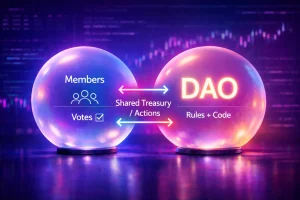
These are the tokens you use to vote on changes within decentralised protocols. UNI (Uniswap), AAVE, COMP, they all let holders shape the future of the platforms they belong to.
Some people treat them as investments. Others hold them to have a say. But the more financial power a token gives, the more likely it is to cross into security territory.
It’s a fine line between governance and ownership. And again, the SEC doesn’t play nice.

Image from a16z crypto
Real-World Chaos Affects Token Drama
Crypto doesn’t live in a vacuum. Real-world chaos like the U.S.-China tariff drama, spooks markets. And risky tokens? They drop first.

Memecoins might fly on vibes, but in a panic? They nosedive.
Smart money isn’t chasing frogs. Pelosi’s bets are on AI and infrastructure—real value, not viral noise.
In crypto, the same logic holds: tokens with purpose survive. Hype doesn’t.
💡 Final Take: Know Your Tokens Before They Know Your Wallet
Here’s the thing: smart traders don’t chase trending coins or ape in because someone yelled “🚀” on X.
They’re not buying hype. They’re buying utility.
If your token doesn’t do anything, it won’t add anything to your portfolio. Smart money knows the difference between a coin that runs a network… and one that just runs its mouth.
So ask yourself:
❌ Still holding tokens because they’re funny?
✅ Or finally reading the label before adding to cart?
Here’s what to do next:
👀 Want alpha that actually makes it through a bear market? Join 20,000+ traders in our Telegram. No hype, just sharp insights. 📰 Subscribe for weekly breakdowns like this—before your bags bleed.
Because in crypto, the smartest flex is staying solvent.