

The Rise of Real-World Asset (RWA) Tokens: Opportunities and Regulatory Risks

Get Breaking News First!
Editor’s choice
-

What Is DeFi? How Decentralized Finance Unlocks Financial Freedom
-

The Real Trader’s Guide to Crypto Market Orders
-
NFTs Explained for Beginners: Why Digital Ownership Actually Matters
-
How Crypto Scoring Really Works (And Why Rankings Matter More Than Hype)
-

The Rise of the Micro-Influencer in Web3
-
The 24/7 Market: How to Avoid “Crypto Burnout.”
Owning a slice of a Manhattan skyscraper or a Picasso used to require serious connections—or serious money. Not anymore. Real-World Asset (RWA) tokens are tearing down the velvet ropes, letting anyone with a wallet and Wi-Fi invest in everything from fine art to farmland.
But while the tech opens doors, the rules are still a mess. Regulations lag. Risks pile up. And not everyone’s playing fair.
This guide breaks down the real opportunities, the regulatory landmines, and how to make smart moves in the next big crypto wave.
Join our community of 400K+ and never miss breaking news!
We respect and protect your privacy. By subscribing your info will be subject to our privacy policy . Unsubscribe easily at any time
Real-World Asset (RWA) Tokens: Overview
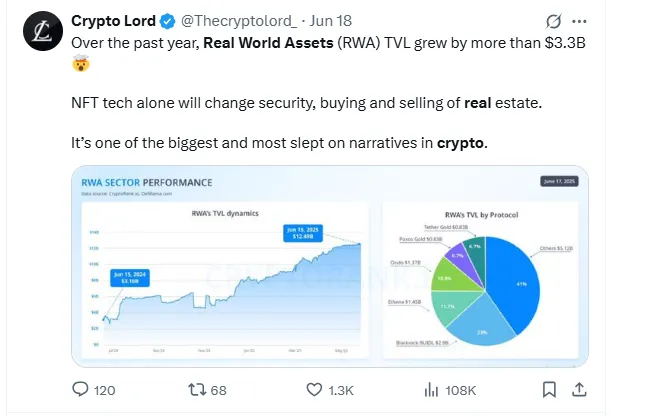
Traditionally, assets like real estate, gold and fine art were only reserved for the rich. But today, RWA tokens are flipping the script, turning these assets into digital tokens anyone can trade.
Smart contracts handle the fine print, the blockchain logs every move, while you get instant, transparent ownership. It’s fractional, digital, and finally accessible.
Opportunities Presented by RWA Tokens

Instead of needing millions to own a skyscraper or a rare painting, you can now buy a slice — just like buying shares. Blockchain makes the whole process faster, cheaper, and transparent.
⚙️ How it works:
✅ What that means for you:
🌍 For asset owners:
Tokenization unlocks new ways to raise capital and reach global investors. It’s real-world finance, upgraded.
📈 Tip: Want to see which RWA sectors are trending? Check Google Trends for a real-time pulse on investor interest.
🚨 The Risks Behind the Hype

Despite the exciting potential of RWA tokens, they’re swimming in a regulatory ocean that’s about as clear as mud.
Every country’s got its own rulebook, and most aren’t written for blockchain. Navigating KYC, AML, and securities laws is like building on quicksand — tricky, time-consuming, and full of traps.
Security is another biggie🤦♂️.
Smart contracts can automate everything… until one bug wipes out millions. And remember, the real-world assets backing those tokens? They’re still stuck in centralized vaults. If the custodian fumbles, your “decentralized” investment isn’t so decentralized after all.
⚖️ The courts are confused.
Join our community of 400K+ and never miss breaking news!
We respect and protect your privacy. By subscribing your info will be subject to our privacy policy . Unsubscribe easily at any time
Legal gray zones = inconsistent enforcement. Some projects get green lights, others get lawsuits. You won’t always see it coming.
💡 Bottom line:
The Future Outlook: Balancing Innovation and Regulation

RWA tokenization is accelerating, and regulators are finally waking up.
Jurisdictions like Switzerland and Singapore are launching sandbox rules. The U.S. is slowly moving from “nah” to “maybe.”
Wall Street’s not waiting, BlackRock and Goldman are already live-testing tokenized funds.
📈 With the market projected to hit $30 trillion by 2034, the next phase is clear: tighter rules, better security, and broader access.
The winners here are builders and investors who can move fast and stay compliant.
🌍 And if you’re hunting for tax-free zones? Some countries are already offering zero-tax policies for crypto gains. Smart RWA holders are watching.
🧠Final Thoughts
RWA tokens are shaking up old-school finance, and opening doors for anyone willing to learn the ropes. But don’t let the hype do your homework for you.
Stay informed, watch the regulatory shifts, and let smart strategy, not just FOMO, guide your moves. The future of finance is being built right now. Are you ready to claim your piece?
Don’t trade alone. 🤝 Join 20,000+ crypto enthusiasts on Telegram for up-to-the-minute alerts and community wisdom. Also, get our newsletter for daily insights. Perfect for leveling up your portfolio🚀.