

Why Venezuela’s Locked-Up Billions Suddenly Matter to U.S. Energy Stocks
Get Breaking News First!
Editor’s choice
-

🔐 One Wallet for Everything Is How Most Traders Get Hurt. Here Is How Many You Actually Need
-
💰 Don’t Sell Your Bitcoin – Borrow Against It: The Best Platforms in 2026
-

MetaMask Who? The Web3 Wallets Traders Are Actually Using in 2026
-
💼 When Crypto Trading Becomes a Business: The IRS Rules Every Active Trader Needs to Know
-
₿ Why Local Businesses Are Taking Bitcoin Seriously in 2026
-

⚡ The Best of Both Worlds: How Hybrid Crypto Exchanges Are Changing the Way We Trade
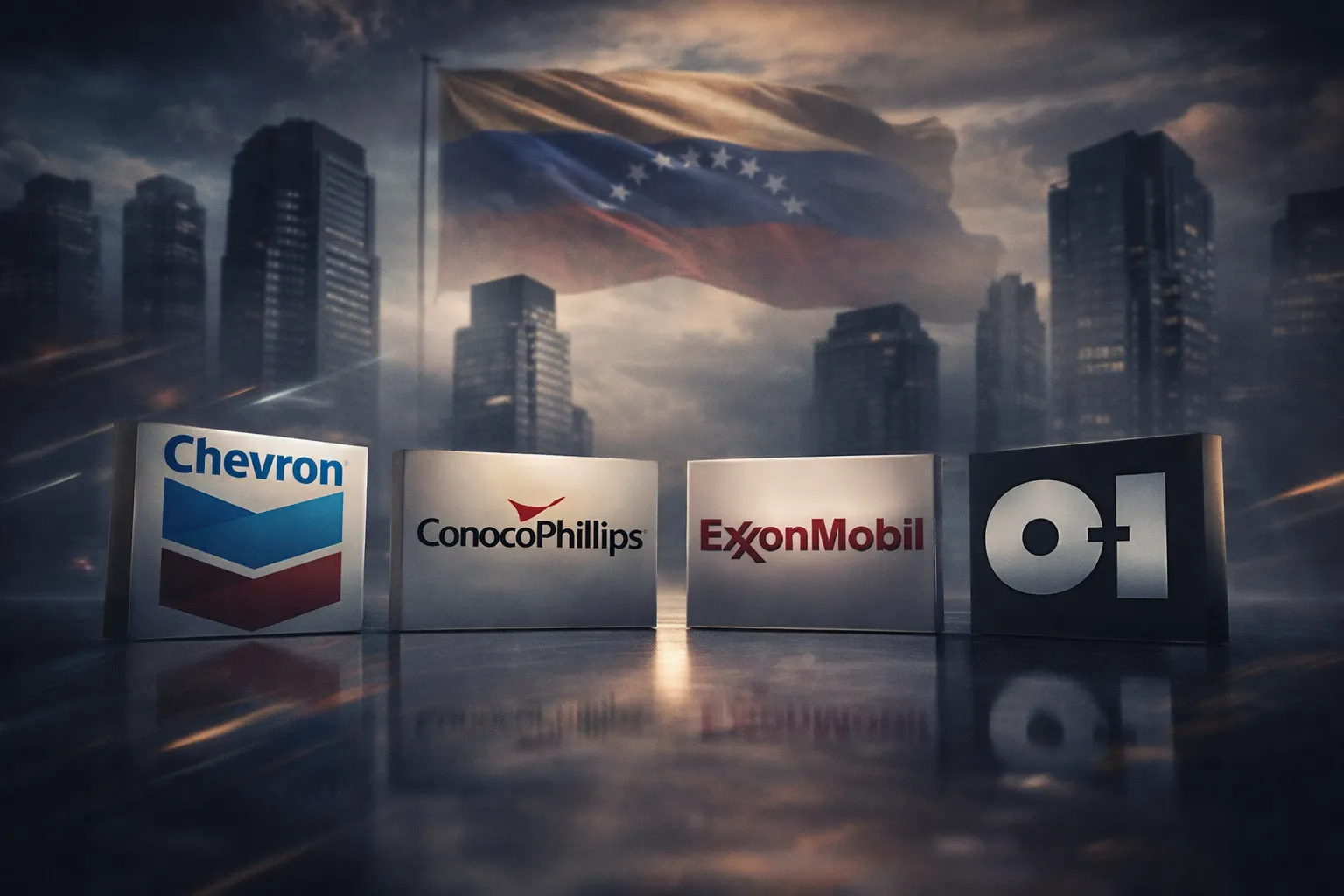
Some U.S. companies are sitting on billions tied to Venezuela, and most people don’t even notice. Chevron, Conoco, Exxon, and O-I Glass could see big changes if old debts get paid or oil production starts again.
This isn’t politics, it’s real money waiting quietly. A small move in Venezuela could make these stocks jump, and anyone paying attention now could get ahead.
Where the Exposure Actually Sits
That money isn’t all tied up in the same way.
Join our community of 400K+ and never miss breaking news!
We respect and protect your privacy. By subscribing your info will be subject to our privacy policy . Unsubscribe easily at any time
Some companies are exposed through oil still flowing today, led by Chevron, which continues operating inside Venezuela. Others are owed billions from old deals that were never paid, including ConocoPhillips, ExxonMobil, and O-I Glass. A third group, SLB and Halliburton, stands to benefit if drilling restarts and infrastructure work picks up again.
Those differences matter. Each group responds to different triggers, and the advantage shows up on different timelines, often before the headlines catch on.
The Companies Closest to the Cash
Chevron sits at the front of the line. It’s the only major U.S. oil company still operating in Venezuela under a special license, handling an estimated 10–15% of national output. Chevron is also owed roughly $3 billion from past PDVSA deals, meaning any production boost or repayment flows straight to revenue.
ConocoPhillips is next. It’s owed more than $10 billion from assets taken years ago, and most of that money has stayed frozen. Any settlement or asset access would turn a long-dormant claim into real cash.
ExxonMobil holds smaller claims, around $1.6 billion, but even partial recovery would quietly strengthen its balance sheet without new drilling.
O-I Glass is a wildcard. It’s owed about $700 million, a massive figure relative to its size. If Venezuela sells assets and creditors get paid, the impact could be immediate.
Then there are the rebuild plays. SLB and Halliburton scaled back years ago, but any restart in drilling or repairs would likely pull them back in, positioning both to benefit if activity ramps up
Hidden Waves in Energy Stocks
If Venezuela starts moving money or pumping more oil, the effects wouldn’t be subtle for long. The first signs would show up in energy stocks people already recognize, as prices start drifting before any official announcement.
Oil itself wouldn’t suddenly crash or spike. Instead, you’d see small shifts adding up – service companies getting busier, producers getting a little more confident, and energy names quietly catching a bid. By the time it feels obvious, the early move is usually over.
That’s how these stories tend to play out. The change shows up in prices first. The explanation comes later.
How Traders Might Approach This
This isn’t a one-day trade. It’s a wait-and-watch setup.
The edge comes from tracking movement before confirmation – changes in oil shipments, hints of payments, asset sales, or companies quietly updating guidance. Those signals tend to surface weeks before prices fully adjust.
Some traders may focus on the biggest names, like Chevron or ConocoPhillips, where even small changes can move expectations. Others may look at smaller or overlooked stocks, where a partial payout or restart could have an outsized impact.
The key is patience. This is the kind of setup that rewards early attention, not fast reactions.
What to Watch Next

The real signals won’t come from speeches or headlines. They’ll come from movement.
Watch for oil shipments picking up, even quietly. More tankers leaving, more barrels moving, more activity around exports. That’s usually the first sign something has shifted.
Pay attention to debt talk turning into action. Not promises, not negotiations – actual payments, settlements, or asset sales. If money changes hands, the story changes fast.
Join our community of 400K+ and never miss breaking news!
We respect and protect your privacy. By subscribing your info will be subject to our privacy policy . Unsubscribe easily at any time
Also watch who gets involved. If outside players start backing off, it suggests trouble. If more companies move in, it’s a sign confidence is returning.
What could stop all of this is just as simple. If exports stall, payments drag on, or everything gets tied up again, the money stays frozen, and the upside disappears.
That’s the line between noise and signal.
The Bottom Line
This story isn’t about politics or promises. It’s about watching where the money finally goes – and who’s already in position when it does.
Our Telegram channel is where those moves get flagged in real time – for readers who want the edge, not the recap.
Our free newsletter delivers those updates directly – for readers who want the move, not the recap.