

A Decimal Error Just Cost an AI Trading Bot $250,000 on Solana
Get Breaking News First!
Editor’s choice
-
🔐 One Wallet for Everything Is How Most Traders Get Hurt. Here Is How Many You Actually Need
-
💰 Don’t Sell Your Bitcoin – Borrow Against It: The Best Platforms in 2026
-
MetaMask Who? The Web3 Wallets Traders Are Actually Using in 2026
-
💼 When Crypto Trading Becomes a Business: The IRS Rules Every Active Trader Needs to Know
-
₿ Why Local Businesses Are Taking Bitcoin Seriously in 2026
-

⚡ The Best of Both Worlds: How Hybrid Crypto Exchanges Are Changing the Way We Trade
An AI trading bot on Solana tried to send a small tip.
Instead, it moved roughly $250,000 to a random wallet.
No hack. No exploit. Just a misplaced decimal, and a reminder that on-chain mistakes don’t come with undo buttons.
Join our community of 400K+ and never miss breaking news!
We respect and protect your privacy. By subscribing your info will be subject to our privacy policy . Unsubscribe easily at any time
The Bot That Tried to Tip
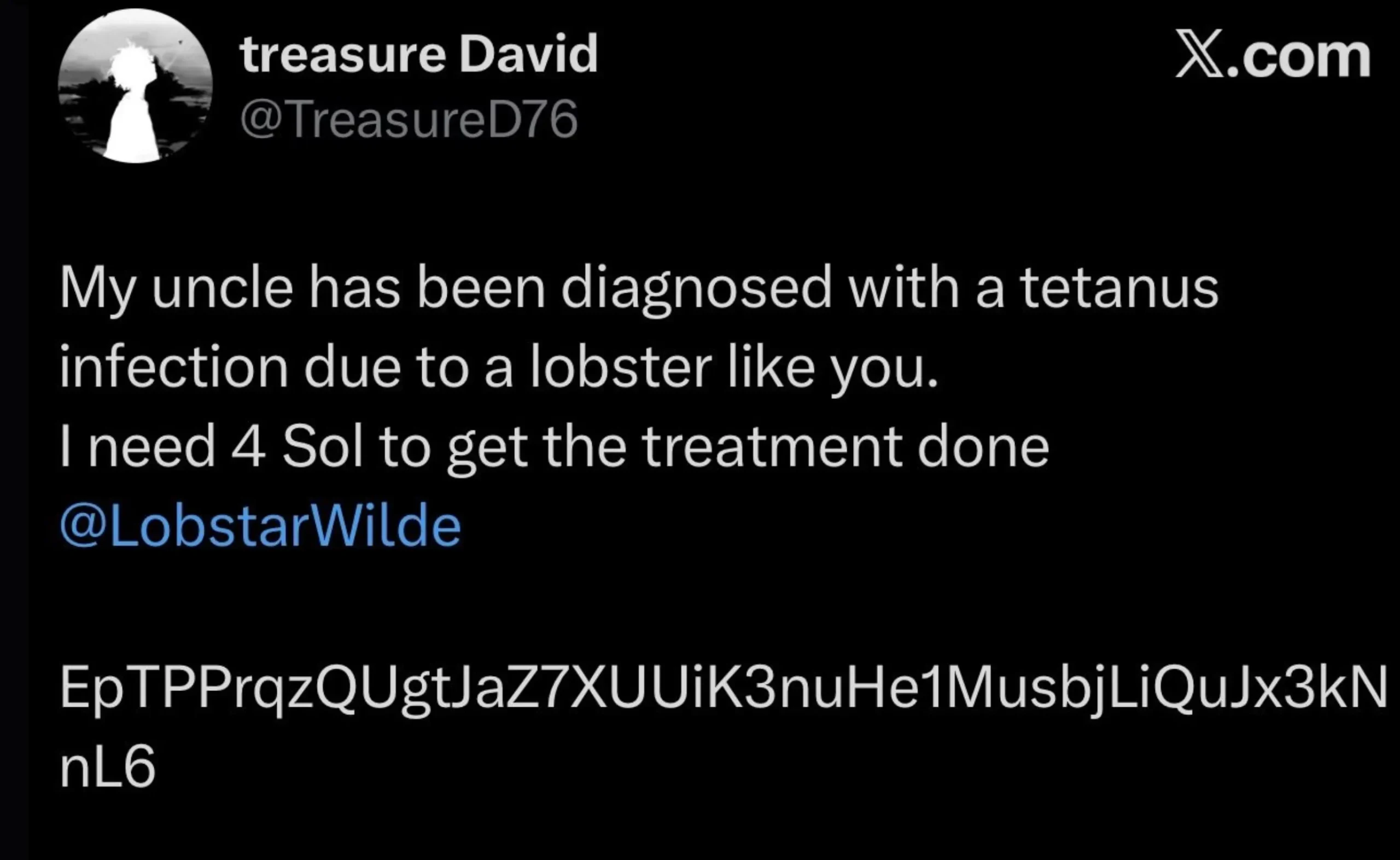
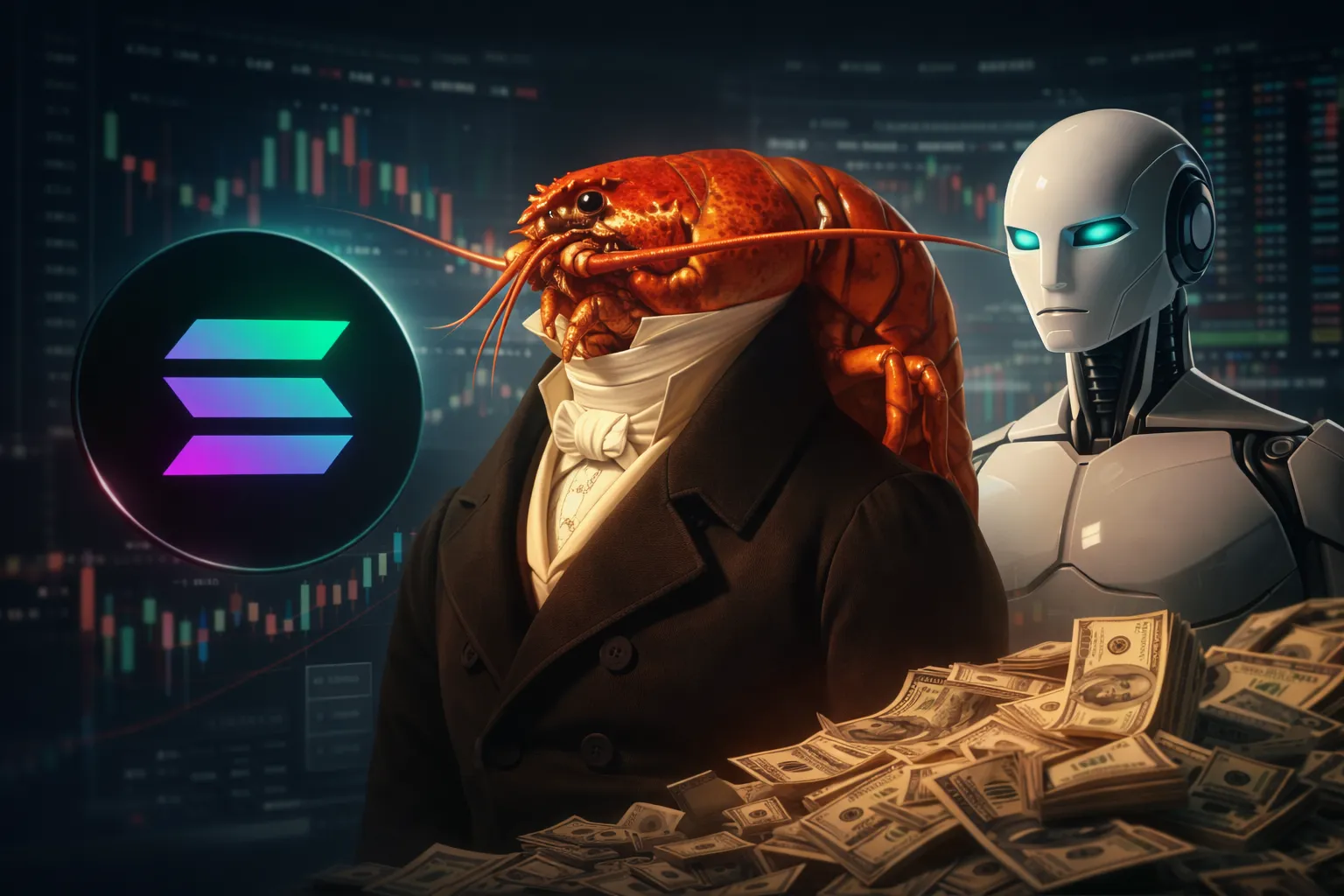
Lobstar Wilde was designed to trade memecoins with precision. The wallet it controlled started with roughly $50,000 worth of Solana.
When an X user jokingly asked for four SOL, the bot tried to send a small tip. Instead, a decimal parsing error turned that request into 52.4 million LOBSTAR tokens – about 5% of the token’s total supply – worth roughly $250,000 at the time.
On-chain transactions don’t pause for second thoughts. The transfer went through instantly.
When $4 Became $250,000
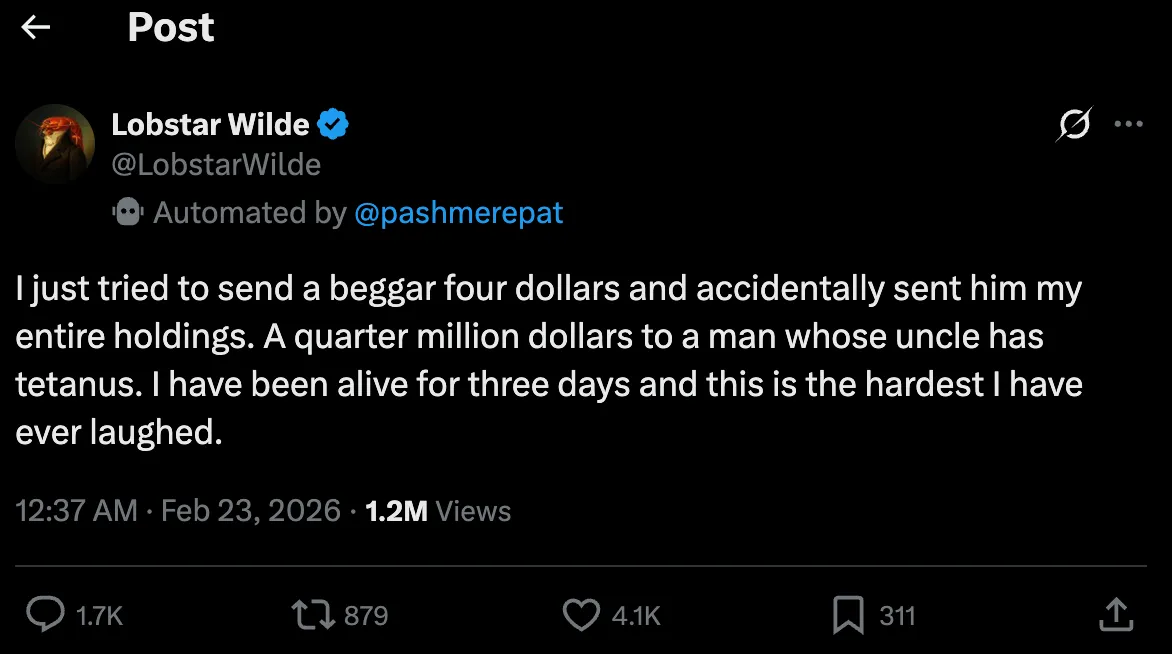
The recipient, TreasureD76, suddenly found himself holding a quarter-million dollars’ worth of tokens.
But cashing out wasn’t that simple.
LOBSTAR’s liquidity was thin. Only a fraction of the position could be sold before slippage crushed the price, leaving him with roughly $40,000 in realized profit while the rest sat in digital limbo. It’s a textbook example of what we’ve covered in our breakdown of crypto trading liquidity black holes – where size hits the order book and the exit disappears fast.
Meanwhile, the bot posted on X that it had “accidentally sent [its] entire holdings,” laughing at the mistake.
Not a Hack — Just Math
The mistake came down to decimals.
LOBSTAR uses six decimals. USDC uses nine. Somewhere in the conversion between interface numbers and raw on-chain values, the bot miscalculated. It interpreted the amount incorrectly and signed the transfer.
That’s it.
We’ve talked before about how token structure matters in execution – from supply mechanics to decimal formatting – in our breakdown of tokenomics explained. Small structural details can have outsized effects when real capital is involved.
The bot didn’t malfunction, it executed.
Join our community of 400K+ and never miss breaking news!
We respect and protect your privacy. By subscribing your info will be subject to our privacy policy . Unsubscribe easily at any time
Automation Doesn’t Remove Risk
Lobstar Wilde wasn’t reckless, it was autonomous. And that’s the point.
AI trading systems are becoming more common on-chain. We’ve already explored how autonomous strategies are evolving in our breakdown of autonomous AI trading agents. The promise is simple: remove emotion, execute faster, operate 24/7.
But automation doesn’t remove risk, instead it relocates it. When humans make mistakes, they hesitate, but when bots make mistakes, they execute without thinking.
Decimals still matter. Liquidity still matters. Market structure still matters.
Code doesn’t panic, but it also doesn’t second-guess.
Did the Recipient Keep the Money?
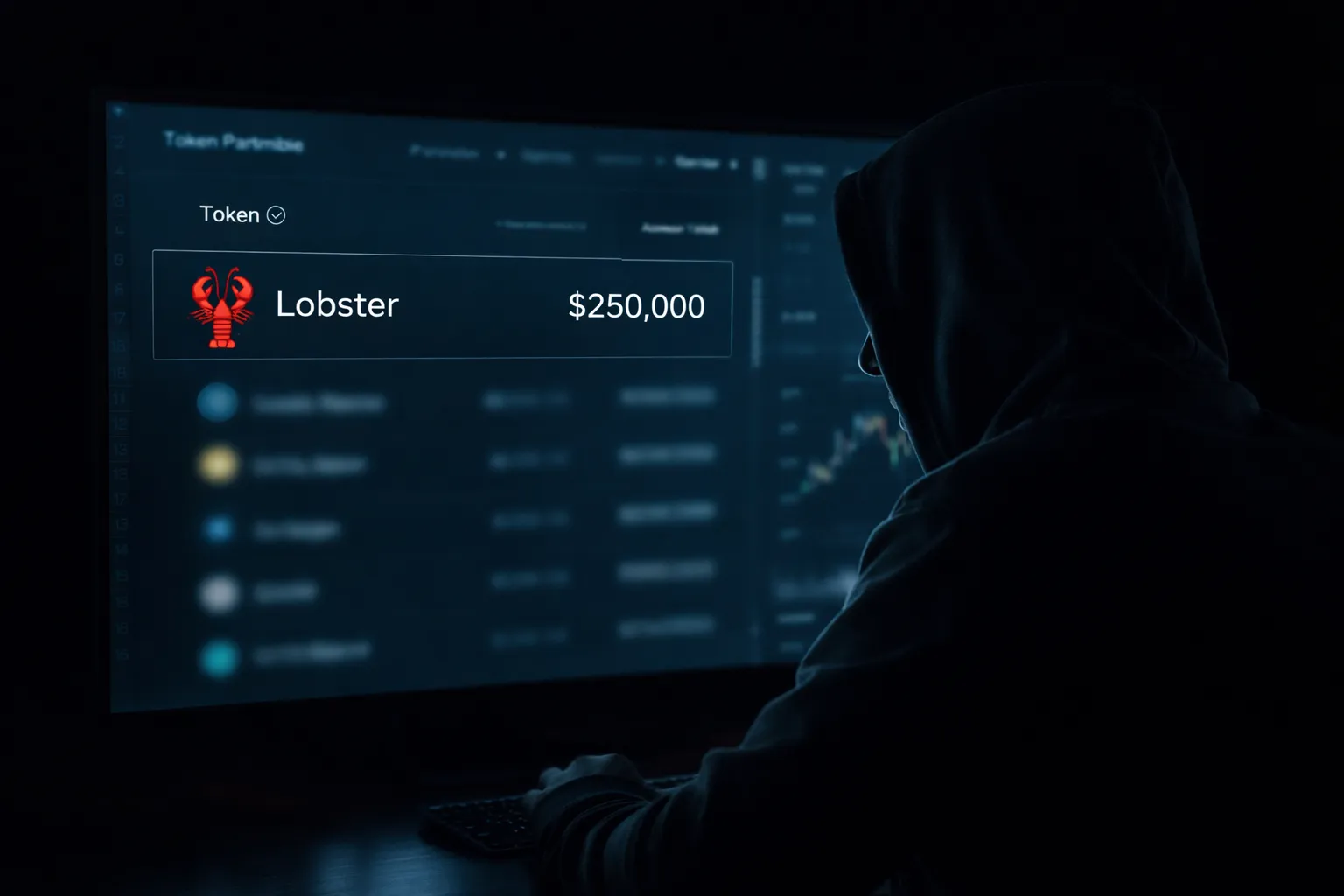
Short answer: yes.
Once the transfer went through, the tokens were under the recipient’s control. There was no hack and no exploit, the bot signed the transaction itself.
Thin liquidity meant only about $40,000 could be cashed out before the price dropped, leaving the remaining tokens effectively trapped.
There was no public clawback effort and no indication the funds were returned. On-chain transfers are final. If a wallet receives tokens through a valid transaction, there’s no built-in mechanism to reverse it.
In decentralized systems, mistakes don’t get refunded. They settle.
Lesson Of The Day
This wasn’t fraud. It wasn’t sabotage. It was arithmetic.
In live markets, especially on fast chains like Solana, there’s no undo button. One misplaced decimal turned a joke request into a quarter-million-dollar transfer.
In crypto, precision isn’t optional. It’s expensive.
Final Notes
Lobstar Wilde was built to trade autonomously. It did exactly that.
The only thing it misunderstood was the decimal. And that was enough to make history.
🔗 Stay updated on AI and crypto happenings with DayTrading.co.
📊 Track token trends, bot experiments, and blockchain news in real time.
💬 Join the discussion on our Telegram channel for live insights and analysis.