

The Real Trader’s Guide to Crypto Market Orders

Get Breaking News First!
Editor’s choice
-
🔐 One Wallet for Everything Is How Most Traders Get Hurt. Here Is How Many You Actually Need
-

💰 Don’t Sell Your Bitcoin – Borrow Against It: The Best Platforms in 2026
-
MetaMask Who? The Web3 Wallets Traders Are Actually Using in 2026
-
💼 When Crypto Trading Becomes a Business: The IRS Rules Every Active Trader Needs to Know
-
₿ Why Local Businesses Are Taking Bitcoin Seriously in 2026
-

⚡ The Best of Both Worlds: How Hybrid Crypto Exchanges Are Changing the Way We Trade
If you’ve traded crypto long enough, you know smashing “Buy” or “Sell” is the amateur lane. Real edge comes from execution, not speed.
Crypto moves fast. Volatility spikes, liquidity shifts, and price doesn’t wait for hesitation. Traders who understand order types don’t just manage risk better – they get filled where others slip, panic, or miss the move entirely.
Here’s a clear breakdown of the crypto order types that actually matter, when to use each, and why experienced traders rely on them to stay precise without staring at charts all day.
Join our community of 400K+ and never miss breaking news!
We respect and protect your privacy. By subscribing your info will be subject to our privacy policy . Unsubscribe easily at any time
Market Orders
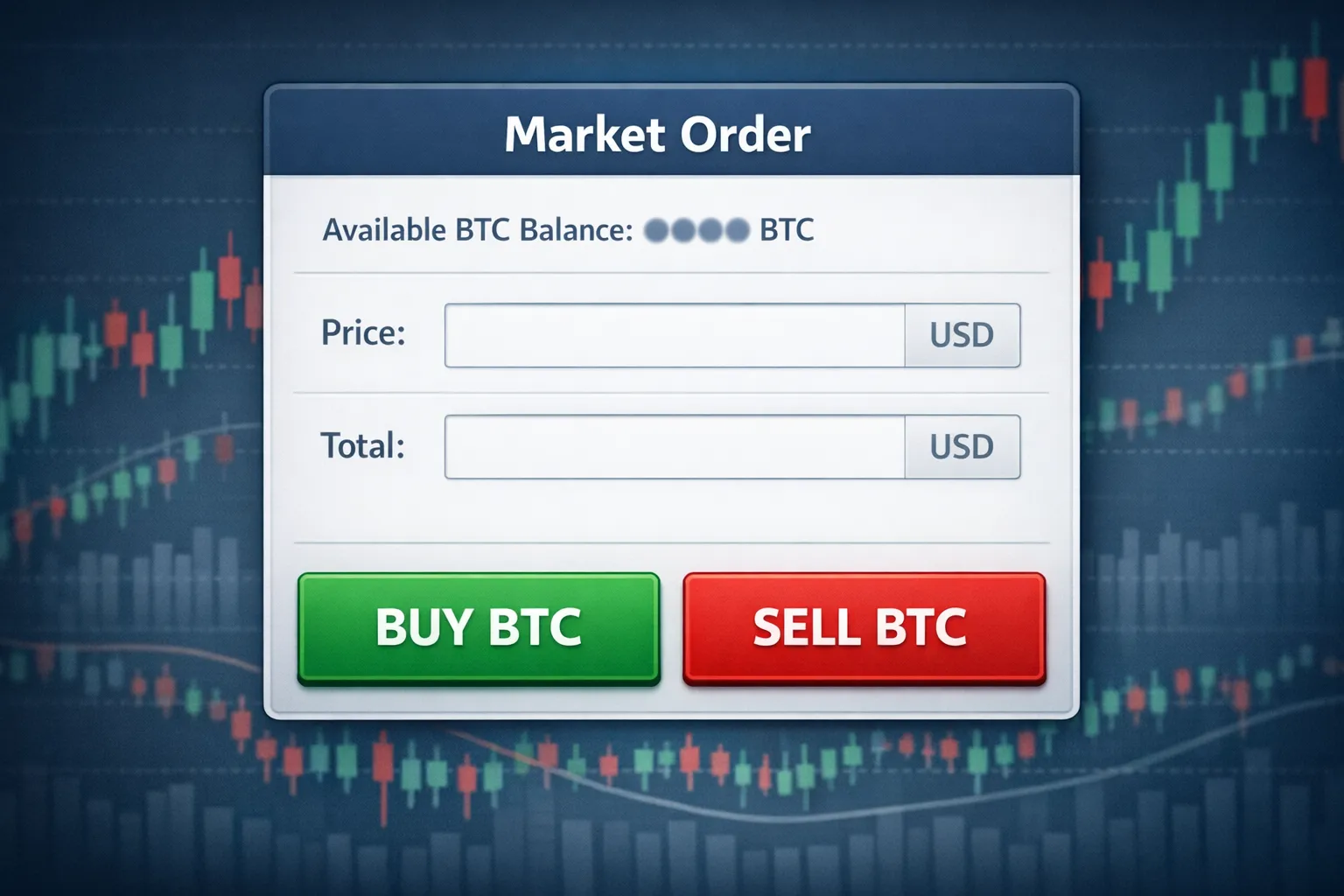
A market order executes instantly at the best available price. It’s the fastest way to get in or out, useful when liquidity is thick and timing is more important than price.
Use case: Breaking news hits, BTC rips through a key level, and you need exposure now. Slippage is the tax for urgency.
Day traders use market orders during high-volume moments. Using them on thin altcoin pairs, though, is just donating money to the spread.
Limit Orders
A limit order lets you set the exact price you’re willing to trade at. It only executes if the market comes to you, not the other way around.
Use case: You want ETH at a clean retest level you identified using candlestick structure, not wherever price happens to be drifting. If it hits your level, you’re in. If it doesn’t, you move on.
This is how experienced traders position quietly. Precision matters, and limit orders are a core tool in how smart money moves in crypto without chasing price or tipping their hand.
Stop-Loss Orders
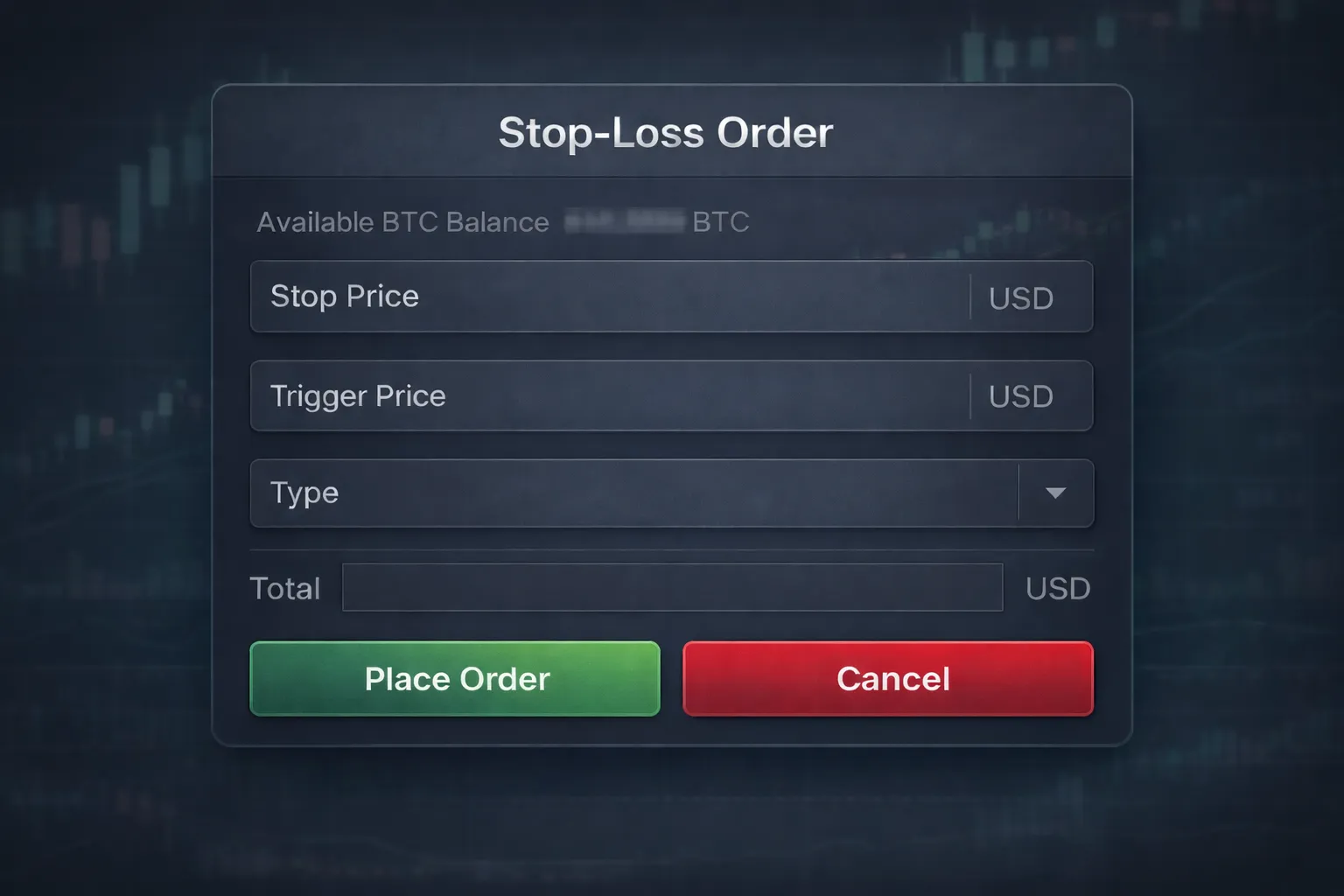
A stop-loss order automatically exits your position when price hits a predefined level. Think of it as downside insurance that limits damage when the trade is wrong.
Use case: You’re long SOL with a clear invalidation level. If price breaks it, you’re out automatically. No hesitation, no “maybe it’ll bounce,” no turning a bad trade into a worse one
If you want to go deeper on how stops actually behave in fast markets, our guide to stop-loss and take-profit orders breaks it down with real examples.
Stop-Limit Orders
A stop-limit order is a two-step order. First, the stop price gets triggered. Once that happens, the exchange places a limit order for you.
A limit order means you’re telling the exchange: “I will only buy or sell at this price or better – nothing worse.” If the market doesn’t offer that price, the trade simply doesn’t happen.
Use case: You want to buy a breakout above resistance, but only if you get filled within a tight range. If price explodes past your limit, the order won’t fill. This protects you from getting caught in a fast fake-out or nasty wick.
Trailing Stop Orders

A trailing stop is a stop-loss that automatically moves with price. As the trade goes in your favor, the stop follows. If price reverses by a set amount or percentage, the order triggers and exits the position.
Join our community of 400K+ and never miss breaking news!
We respect and protect your privacy. By subscribing your info will be subject to our privacy policy . Unsubscribe easily at any time
Use case: You catch a strong trend day in BTC or an alt rotation. A trailing stop lets you stay in the move while locking in gains, so you don’t give back the entire run if momentum suddenly flips.
This keeps it simple, practical, and usable for first-time readers without losing trader credibility.
OCO Orders
OCO stands for “One Cancels the Other.” It lets you set a take-profit and a stop-loss at the same time. When one triggers, the other cancels.
Use case: You enter a defined setup, want gains locked in above and risk capped below, and you don’t plan to babysit the chart. Swing traders use these constantly, especially those balancing positions across several assets, which ties well into the comparison of crypto swing vs. day trading.
IOC and FOK Orders

These are execution-focused order types used when speed and control matter.
Both are about precision. IOC prioritizes speed. FOK prioritizes exact sizing.
Post-Only Orders
A post-only order is a limit order that only sits on the order book. If it would execute immediately, the exchange cancels it.
Use case: When you’re not in a rush and want lower fees, cleaner entries, or to build a position without taking liquidity.
If you need instant execution, don’t use post-only – it’s designed for patience, not speed.
Iceberg Orders (If supported by exchange)

Iceberg orders break a large order into smaller visible pieces. Only a fraction of the total size appears on the order book at any time.
Use case: You’re accumulating or distributing a larger position and don’t want to alert the market or invite front-running.
Trade Smart; Join Our DayTrading Community Today
Order types aren’t technical extras; they’re leverage over execution. Good traders know when to be fast, when to be precise, and when to automate discipline, so emotion doesn’t blow up their plan. Master these tools and your trading stops being reactive and starts being deliberate.
If you want weekly market breakdowns built for active traders, subscribe to the newsletter and join our Telegram with 50K+ traders sharpening their edge every day.