

How Crypto Scoring Really Works (And Why Rankings Matter More Than Hype)

Get Breaking News First!
Editor’s choice
-
🔐 One Wallet for Everything Is How Most Traders Get Hurt. Here Is How Many You Actually Need
-

💰 Don’t Sell Your Bitcoin – Borrow Against It: The Best Platforms in 2026
-
MetaMask Who? The Web3 Wallets Traders Are Actually Using in 2026
-

💼 When Crypto Trading Becomes a Business: The IRS Rules Every Active Trader Needs to Know
-

₿ Why Local Businesses Are Taking Bitcoin Seriously in 2026
-

⚡ The Best of Both Worlds: How Hybrid Crypto Exchanges Are Changing the Way We Trade
If crypto rankings actually worked, everyone would be rich just buying whatever sits at the top of the list.
That assumption is exactly why most beginners lose money.
Open CoinMarketCap or CoinGecko and crypto looks like a leaderboard. Coins jump around, rankings reshuffle, and it feels logical to trust whatever’s near the top. The problem here is that these rankings don’t measure quality, they measure activity.
Join our community of 400K+ and never miss breaking news!
We respect and protect your privacy. By subscribing your info will be subject to our privacy policy . Unsubscribe easily at any time
Crypto scoring is about how a coin is evaluated, including the fundamentals, liquidity, risk, and real usage, not just where it sits today. This guide breaks down how crypto scoring and ranking really work, what they miss, and how to compare coins without chasing hype
What Crypto Scoring and Ranking Actually Measure

Every scoring model has its own formula, but most evaluate the same core categories:
🧱 Fundamentals
Who’s building the project and whether they’re actually delivering.
✔️ Team strength, roadmap execution, partnerships, and tech quality.
✔️ A slick whitepaper doesn’t matter if nothing gets built.
🪙 Tokenomics
Looks at how the token behaves over time. Supply schedule, distribution, utility, emissions, and unlock dynamics. These can make or break a project over time. The deep dive on tokenomics explained covers why coins with heavy unlock cliffs often underperform.
📊 Market Data
Reflects how the asset trades in reality. Liquidity, trading volume, volatility, and price consistency help scoring models judge whether a coin can be traded efficiently. Higher scores here usually mean tighter spreads, easier execution, and less slippage, which matters far more than beginners expect.
🔗 On-Chain Activity
This shows whether anyone is actually using the network. Wallet activity, transaction volume, staking participation, and holder distribution reveal if demand is organic or just social noise.
⚠️ Risk Factors
This highlights where things can break. Security audits, past exploits, treasury health, governance structure, and ownership concentration all come into play. A project can look healthy on the surface, but if a small group controls most of the supply, risk spikes fast.
How to Read Crypto Rankings Like a Trader

Most crypto ranking dashboards quietly sort assets into risk tiers. The key is understanding what each tier implies for risk and return.
Tier 1: Strong Fundamentals + Strong Tokenomics
Think of this as the “investor comfort zone.” These coins tend to survive cycles, attract real liquidity, and behave more predictably. They don’t always deliver the fastest gains, but they deliver the most consistent ones.
Tier 2: Solid but Underdeveloped
Mid-tier assets are where traders often get interested. The idea is there, execution is still in progress, and rankings can improve quickly as milestones are hit. These names tend to work well for swing trades because upgrades, launches, or traction changes can move them up the ladder fast.
Tier 3: High Risk, High Narrative, Low Stability
Most of the market lives here. Nothing wrong with allocating small exposure, but don’t build a portfolio around them.
Ranking systems aren’t there to make choices for you. They’re scaffolding. They help you understand where each asset sits on the risk curve so you can position appropriately.
Metrics Investors Should Prioritize

Scoring models list dozens of metrics. Not all matter equally.
Join our community of 400K+ and never miss breaking news!
We respect and protect your privacy. By subscribing your info will be subject to our privacy policy . Unsubscribe easily at any time
1. Liquidity Quality
High liquidity means smooth entries and exits. Low liquidity magnifies losses.
2. Holder Distribution
A decentralized holder base reduces rug risks and pump-and-dumps.
3. Real Usage
Are people actually using the product or chain? Cold ecosystems rarely produce hot returns.
4. Token Supply Dynamics
Inflationary tokens need constant demand just to stay flat.
5. Treasury and Runway
Projects with strong capital reserves survive bear markets better, which ties into long-term portfolio strength, expanded in the guide to building a bulletproof crypto portfolio.
How to Use Scores to Build a Smarter Crypto Portfolio
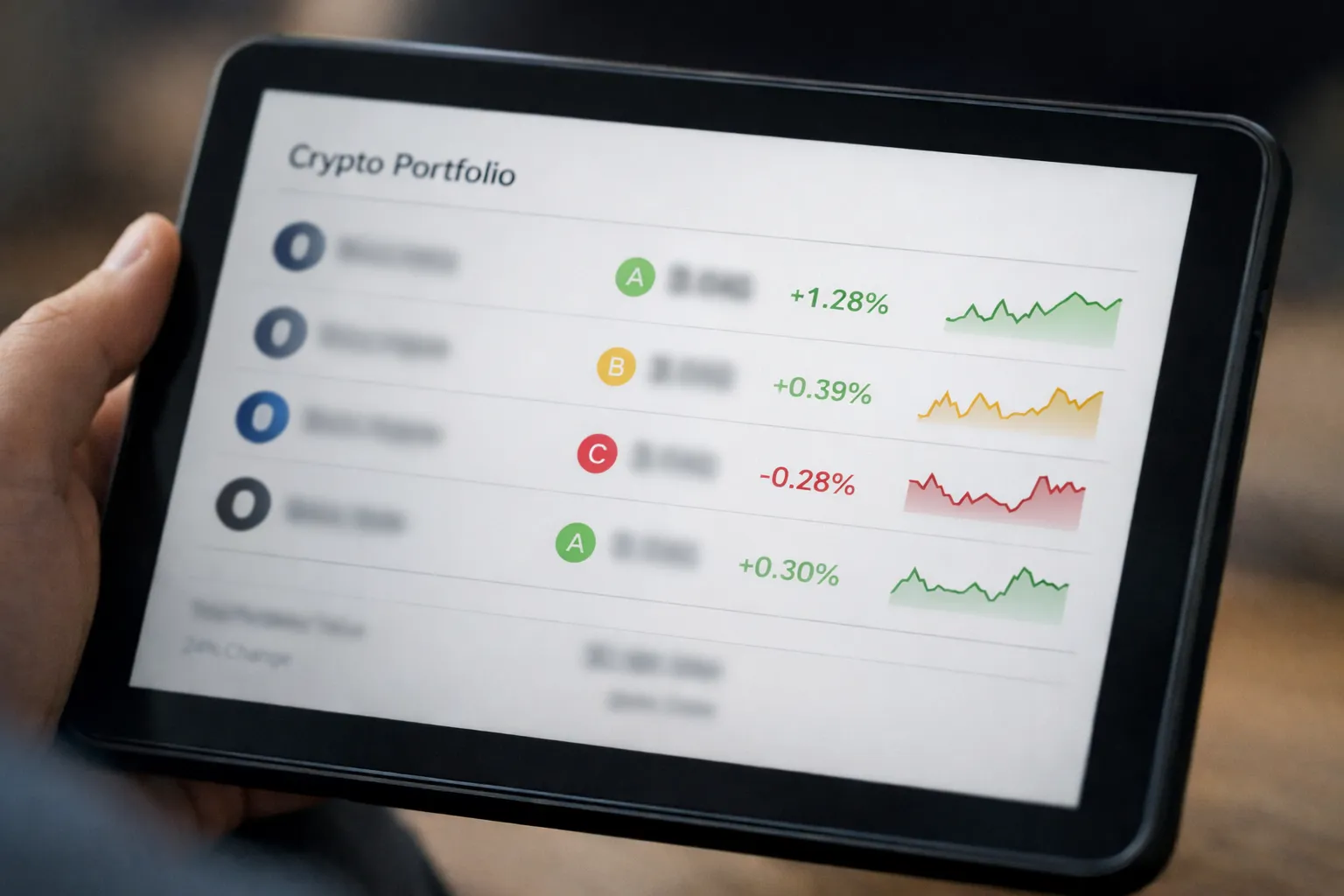
This is where scoring becomes practical instead of theoretical.
Allocate Based on Quality, Not Hype
Use Tier 1 assets as anchors. Mix in carefully chosen Tier 2s. Keep Tier 3s small and tactical.
Watch for Upgrades and Downgrades
When fundamentals or on-chain activity improve, scores often move before price does. The same goes in reverse. Early shifts matter more than absolute rankings.
Balance Risk Across Categories
Avoid stacking the same exposure over and over. Don’t cluster into all L1s, all AI tokens, or all small-caps. Spreading exposure helps you avoid correlation traps.
Use Tools to Track Scores Across Time
Smart dashboards give you alerts on scoring swings. Platforms featured in the top smart trading tools guide help monitor these moves.
Pair those with reliable trackers to monitor your allocations, like the ones covered in top crypto portfolio trackers.
Avoiding Common Misuses of Scoring
Beginners typically confuse ratings with predictions. A high score doesn’t mean “buy now.” A low score doesn’t mean “dead project.” Scoring is situational. Context matters.
Many new traders simply copy portfolios from influencers or use copy-trading platforms without understanding the underlying strength of assets, a mistake that shows up constantly in crypto copy trading.
Used properly, scores help you filter risk and ask better questions. Used lazily, they become just another excuse to chase moves late.
Trade With Structure, Not Noise
Crypto scoring won’t trade for you, and that’s the point. It gives you a framework to judge assets objectively in a market that thrives on chaos.
When you combine scores with discipline, portfolio structure, and risk awareness, you stop reacting and start positioning. That’s how OG traders survive the cycles.
Crypto scoring helps you filter noise. Timing is what turns it into an edge.
Our Telegram delivers real-time crypto news and market alerts, so when scores shift and rankings move, you see it as it happens.
The newsletter keeps you ahead of the bigger picture: what’s changing, why it matters, and what to watch next.