
Edited by Blaise A.
Written by Day Trading Team Day Trading Team

Avoiding the “Revenge Trade”: Mastering Crypto Psychology in High-Volatility Conditions

🧠What You Should Know

✅ Revenge trading is emotional trading disguised as strategy—it destroys accounts fast.
✅ Loss aversion is stronger in volatile markets, making bad decisions feel “urgent.”
✅ FOMO, sunk costs, and anchoring can nuke your edge more than bad Technical Analysis ever will.
✅ Post-loss recovery isn’t about winning it back—it’s about regaining discipline.
✅ A written recovery plan beats raw willpower every single time.

Join Our Group

Follow on

Get Breaking News First!

Editor’s choice

  • traders using chatgpt

    Most Traders Use ChatGPT Wrong — These 7 Prompts Fix That

  • Venezuela bitcoin reserve

    BREAKING: U.S. Eyes Venezuela’s $60B Bitcoin Hoard

  • wBTC

    Wrapped Bitcoin (wBTC): Making Bitcoin Work on the Ethereum Network

  • terrible month for crypto

    Why Crypto’s Having a Terrible, Horrible, No Good, Very Bad Month

  • IPO 2026 lineup

    2026’s IPO Lineup Is Getting Dangerous

  • buy bitcoin

    How to Buy Your First Bitcoin in the US Without Getting Lost in the Noise

You just took a hit. The urge to “get it back” is building. The chart is flashing setups you want to believe in. This is the revenge trade zone, and it’s where traders burn accounts faster than any bad entry signal ever could.

In crypto’s high-volatility arena, psychology isn’t an afterthought, it’s your lifeline. You can have flawless technicals, but if ego is driving your trades, you’re already handing the market your edge. This guide exposes the traps that wreck traders, and the recovery playbook pros use to survive the chaos.


⚠️Cognitive Traps That Sink Traders

cognitive trap that sink traders
  • Revenge Trading: After a loss, your brain starts calculating how to “make it back” with one or two trades. It’s not analysis—it’s emotion wearing a disguise. This mindset often leads to oversized positions, chasing weak setups, and even more damage.
  • FOMO (Fear of Missing Out): A rally starts without you, and suddenly patience feels like weakness. You chase into overheated moves at peak risk. What started as “I can’t miss this” often ends as “Why did I buy the top?”
  • Anchoring: You’re stuck on old prices, BTC’s $69K, ETH at $4K, and ignore today’s structure. Clinging to the past blinds you to the actual market in front of you.
  • Confirmation Bias: After a loss, you only look for signals that support your next trade idea, ignoring contradicting evidence. In crypto’s fast swings, this tunnel vision is lethal.
  • Sunk Cost Fallacy: You hold a losing trade longer because “you’ve already lost too much” to close it now. The market doesn’t care what you’ve invested, only where it’s going next.

🛡 Battle Plan: Regain Control After a Blow-up
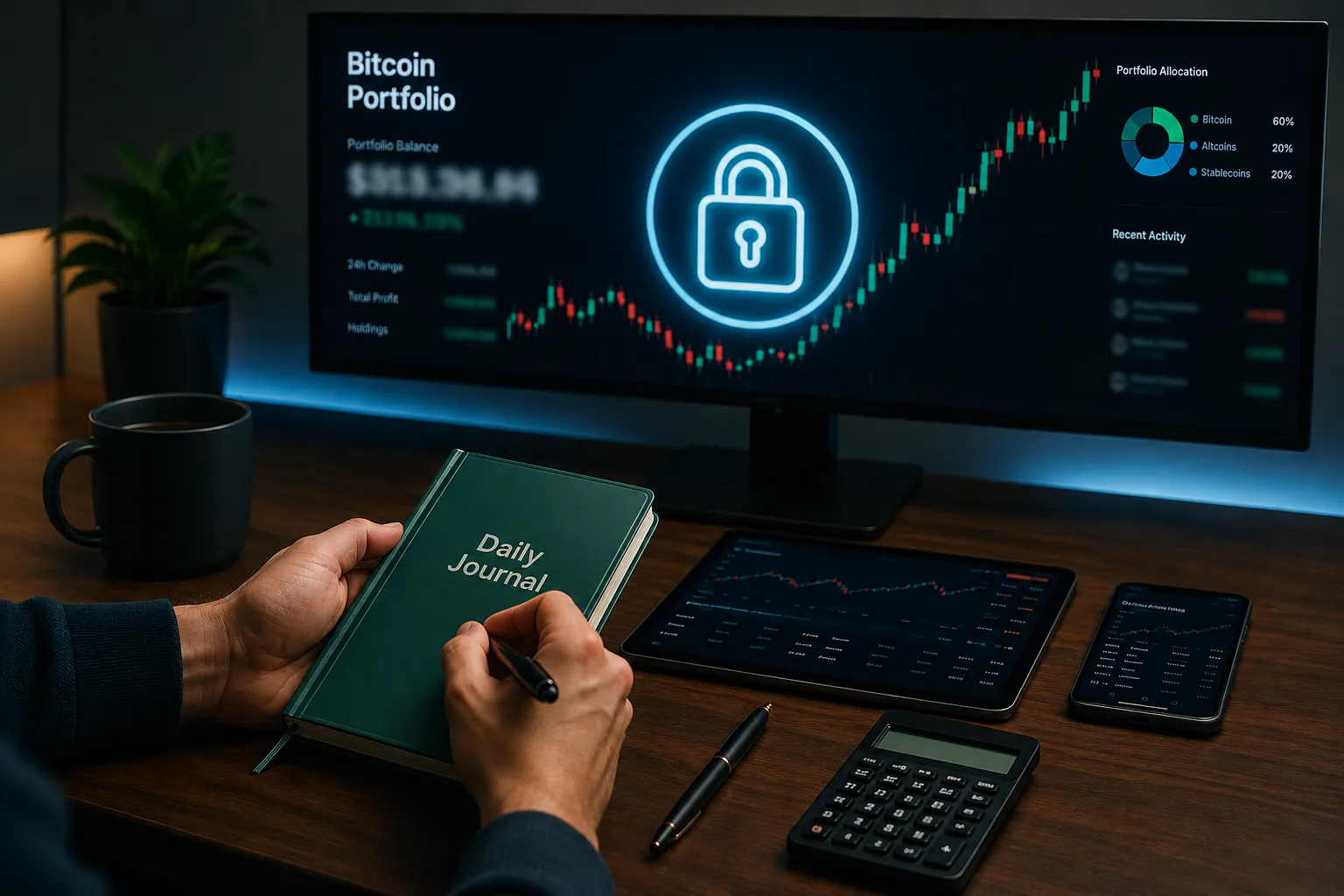
Journaling Post-Loss
  1. Trading-Break Protocol: Set a hard daily or weekly loss limit before you start. If you hit it, whether that’s 3% of capital or a set dollar amount, your session ends. Step away, no negotiation.
  2. Account-Lock Tools: Some platforms, including picks from the best crypto exchanges in 2025 list, let you enable cooldown periods that restrict trading for a set time. It forces you to cool off before making your next decision.
  3. Journaling Post-Loss: Don’t just log entries and exits—log emotions. Note if you felt angry, overconfident, or hesitant. Patterns emerge, and those patterns become your early warning system.
  4. Routine for Recovery: After a bad session, have a fixed reset routine: hydrate, move your body, review trades, then study market structure without placing orders. Use that time to review how smart money moves in crypto during similar volatility so you’re refocusing on objective flows instead of emotions.

⚠️ Why This Matters More Than Indicators

crypto high-volatility

When you’re down, the market isn’t your biggest threat, your loss aversion is. Studies show losing money hurts about twice as much as winning feels good. That pain triggers impulsive, high-risk behavior, especially in a market where volatility can swing your PnL 10% in an hour


Join our community of 400K+ and never miss breaking news!

We respect and protect your privacy. By subscribing your info will be subject to our privacy policy . Unsubscribe easily at any time

High-volatility conditions amplify every bias:

  • FOMO hits harder because moves happen faster.
  • Anchoring sticks because dramatic price spikes create emotional bookmarks.
  • Revenge trading feels more possible because crypto’s swings make recovering losses in one shot seem realistic.

But here’s the truth: the “get it back” trade almost never works. Your real edge isn’t another indicator—it’s a prebuilt process: clear position sizing, hard stops, and limits on trades per day. That’s how pros stay alive. 👉 For a practical blueprint, check our Top Risk-Management Tips for Successful Crypto Trading.


🧩Post-Drawdown Recovery Mindset

trader recovery mindset

Treat losses as tuition, not debt. Your goal isn’t to win it back, it’s to trade well again. That shift removes urgency and restores patience.

Here’s how pros reset:

  • Restart small → Cut position sizes in half. Only take A+ setups. Focus on execution, not PnL.
  • Paper trade first → This helps you stay in rhythm without risking real capital. Step back only when you feel calm and consistent.

Most traders blow up because they treat recovery like a sprint. The pros treat it like rehab: slow, methodical, and focused on preventing the same injury again.


Trade With Brains; Not Emotions

The difference between a setback and a blown account isn’t the loss—it’s how you trade after it.

Stay disciplined, stay aware, and refuse to let one bad day dictate the next.

Subscribe to our weekly newsletter for tactical psychology and risk strategies, and join our 20K+ member Telegram to trade alongside people who know how to survive the volatility.

Related Article

  • traders using chatgpt

    Most Traders Use ChatGPT Wrong — These 7 Prompts Fix That

    Edited by Blaise A.
    Written by Day Trading Team Day Trading Team
    Jan 14, 2026
  • Venezuela bitcoin reserve

    BREAKING: U.S. Eyes Venezuela’s $60B Bitcoin Hoard

    Edited by Blaise A.
    Written by Day Trading Team Day Trading Team
    Jan 12, 2026
  • wBTC

    Wrapped Bitcoin (wBTC): Making Bitcoin Work on the Ethereum Network

    Edited by Blaise A.
    Written by Day Trading Team Day Trading Team
    Jan 9, 2026
  • terrible month for crypto

    Why Crypto’s Having a Terrible, Horrible, No Good, Very Bad Month

    Edited by Blaise A.
    Written by Day Trading Team Day Trading Team
    Jan 7, 2026
  • IPO 2026 lineup

    2026’s IPO Lineup Is Getting Dangerous

    Edited by Blaise A.
    Written by Day Trading Team Day Trading Team
    Jan 5, 2026
  • buy bitcoin

    How to Buy Your First Bitcoin in the US Without Getting Lost in the Noise

    Edited by Blaise A.
    Written by Day Trading Team Day Trading Team
    Dec 26, 2025
  • BID vs ASK

    Decoding the Crypto Order Book: A Trader’s Secret Weapon

    Edited by Blaise A.
    Written by Day Trading Team Day Trading Team
    Dec 24, 2025
  • crypto marketing

    Crypto Marketing Mistakes: What Makes Your Campaigns Tank

    Edited by Blaise A.
    Written by Day Trading Team Day Trading Team
    Dec 22, 2025
  • DAO Concept

    How to Start a DAO: From Community to Code

    Edited by Blaise A.
    Written by Day Trading Team Day Trading Team
    Dec 19, 2025
  • gasless transaction

    What Is a Gasless Transaction? Paying Zero Fees to Use Web3

    Edited by Blaise A.
    Written by Day Trading Team Day Trading Team
    Dec 17, 2025
  • crypto bubbles

    4 Crypto Bubbles: How They Began and Ended

    Edited by Blaise A.
    Written by Day Trading Team Day Trading Team
    Dec 15, 2025
  • inflationary vs deflationary tokens

    Inflationary Vs Deflationary Token Model: the Difference

    Edited by Blaise A.
    Written by Day Trading Team Day Trading Team
    Dec 12, 2025