

Inflationary Vs Deflationary Token Model: the Difference

Get Breaking News First!
Editor’s choice
-
🔐 One Wallet for Everything Is How Most Traders Get Hurt. Here Is How Many You Actually Need
-
💰 Don’t Sell Your Bitcoin – Borrow Against It: The Best Platforms in 2026
-
MetaMask Who? The Web3 Wallets Traders Are Actually Using in 2026
-

💼 When Crypto Trading Becomes a Business: The IRS Rules Every Active Trader Needs to Know
-
₿ Why Local Businesses Are Taking Bitcoin Seriously in 2026
-
⚡ The Best of Both Worlds: How Hybrid Crypto Exchanges Are Changing the Way We Trade
Crypto tokens fall mostly into two camps: ones that flood the market with supply, and ones that slowly choke it to create scarcity. That contrast between inflationary vs deflationary token models can make or break a coin’s long-term value.
Before you toss money at the next “moonshot,” it pays to know which camp you’re backing. Because whether your bags survive or get wrecked often comes down to how tokenomics treat supply over time.
🤔 What Is an Inflationary Token Model and How Does It Work?

An inflationary token model is one where the total supply of tokens increases over time. New tokens are regularly minted as rewards for miners, validators, or stakers, which helps secure the network, keep people participating, and fund ongoing development.
Join our community of 400K+ and never miss breaking news!
We respect and protect your privacy. By subscribing your info will be subject to our privacy policy . Unsubscribe easily at any time
The inflation rate, which is the pace at which new tokens are minted, can be fixed or adjustable, depending on the project’s governance rules. For example, some tokens mint new units at a steady rate, while others use community voting to modify minting rates based on network needs.
You’ll find this model powering popular cryptocurrencies like Dogecoin, which keeps minting new tokens with no maximum cap, and Ethereum, where validators earn fresh ETH for keeping the network secure.
This model maintains liquidity and supports growth by ensuring fresh tokens are available for transactions and rewards.
While inflationary tokens promote usage and network activity, expanding supply can sometimes reduce the value of individual tokens if demand doesn’t keep pace.
🔖 What Is a Deflationary Token Model and How Does It Work?

Deflationary tokens do the opposite of what you’d expect from money: their supply shrinks over time instead of growing.
Some are designed to act like a kind of liquidity black hole, constantly reducing circulating supply through token burns.
This usually happens in two ways: automatic burns, where a small cut of every transaction is destroyed, or scheduled burns decided by the project. A classic example is the BOMB token, which burns 1% on every transfer. By creating scarcity, deflationary tokens can potentially push prices higher if demand holds up, which is why some investors see them as a hedge against inflation.
🧨 Major Key Differences Between Inflationary and Deflationary Tokens

| Category | Inflationary Tokens | Deflationary Tokens |
|---|---|---|
| Supply Dynamics | Supply continually increases as new tokens are minted and enter circulation, keeping a steady flow of fresh coins. | Supply decreases over time through fixed caps or burn mechanisms, making tokens scarcer. |
| Monetary Policy | New tokens are minted to reward participants and keep liquidity active. | Burning and hard caps reduce supply and help guard against inflation. |
| Holder Incentives | Best used, staked, or spent. Holding too long can feel like watching ice cream melt. | Designed to reward patience; scarcity can increase value over time, like vintage wine. |
💡 How to Choose the Right Model For Your Project
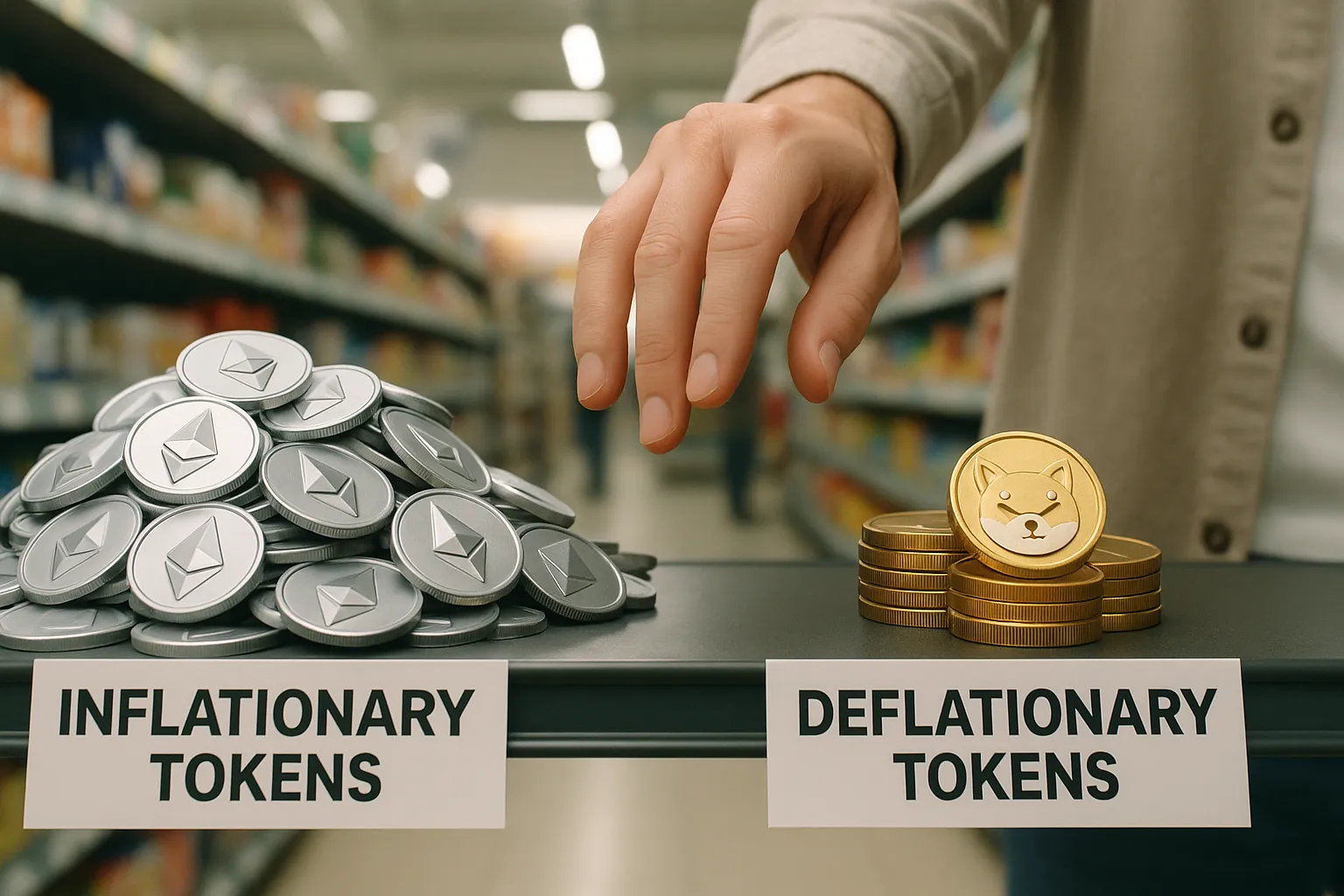
If your project depends on active participation – like a gaming platform or a DeFi marketplace – an inflationary model often works best. Steady token minting keeps users engaged through rewards and ensures there’s enough liquidity for constant activity, which is a core idea in modern crypto token design.
But if you’re building something meant to grow in value over time, such as digital art or a store-of-value asset, a deflationary model makes more sense. Scarcity from burns or fixed caps can help each token become more valuable as supply shrinks.
Whichever path you choose, the token model should match your project’s long-term vision and how you expect users to interact with it.
📌 Final Thoughts
Like choosing between a limitless buffet or a fine dining experience with limited seating, each model serves different appetites and goals. The smart money doesn’t blindly follow either path but rather weighs the project’s purpose, team credibility, and market conditions before placing their bets. Here’s how to move like smart money.
Want the inside scoop on crypto moves? 🔥 Join 20k+ traders on Telegram for lightning-fast alerts and get our newsletter for exclusive market analysis delivered weekly.