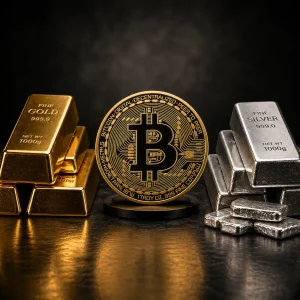


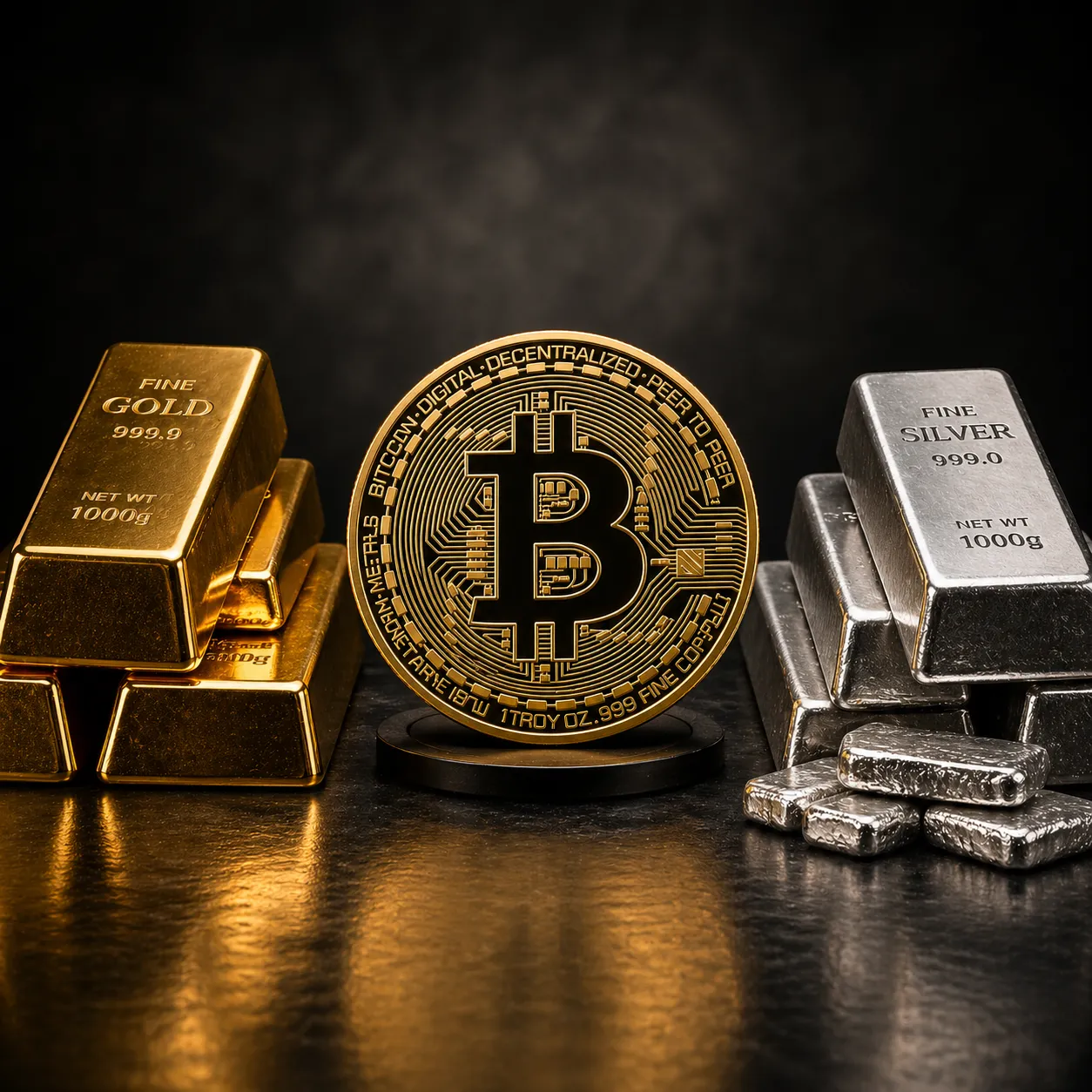
Bitcoin vs Gold vs Silver: The 2026 Fight Over What’s Actually Scarce
Get Breaking News First!
Editor’s choice
-

🔐 One Wallet for Everything Is How Most Traders Get Hurt. Here Is How Many You Actually Need
-
💰 Don’t Sell Your Bitcoin – Borrow Against It: The Best Platforms in 2026
-

MetaMask Who? The Web3 Wallets Traders Are Actually Using in 2026
-

💼 When Crypto Trading Becomes a Business: The IRS Rules Every Active Trader Needs to Know
-

₿ Why Local Businesses Are Taking Bitcoin Seriously in 2026
-

⚡ The Best of Both Worlds: How Hybrid Crypto Exchanges Are Changing the Way We Trade
Bitcoin is hovering near $75K. Gold pushed to fresh highs above $5,500 before pulling back. Silver ran hard to $75, then cooled off.
Three scarce assets, three very different reactions to the same macro environment.
This isn’t really a supply story anymore. The market already understands the numbers. What’s changing in 2026 is which type of scarcity actually holds up under pressure, and that’s being shaped less by supply charts and more by ETFs, central bank flows, and industrial demand.
Join our community of 400K+ and never miss breaking news!
We respect and protect your privacy. By subscribing your info will be subject to our privacy policy . Unsubscribe easily at any time
Here’s where each asset stands.
Scarcity Is No Longer About Supply Alone
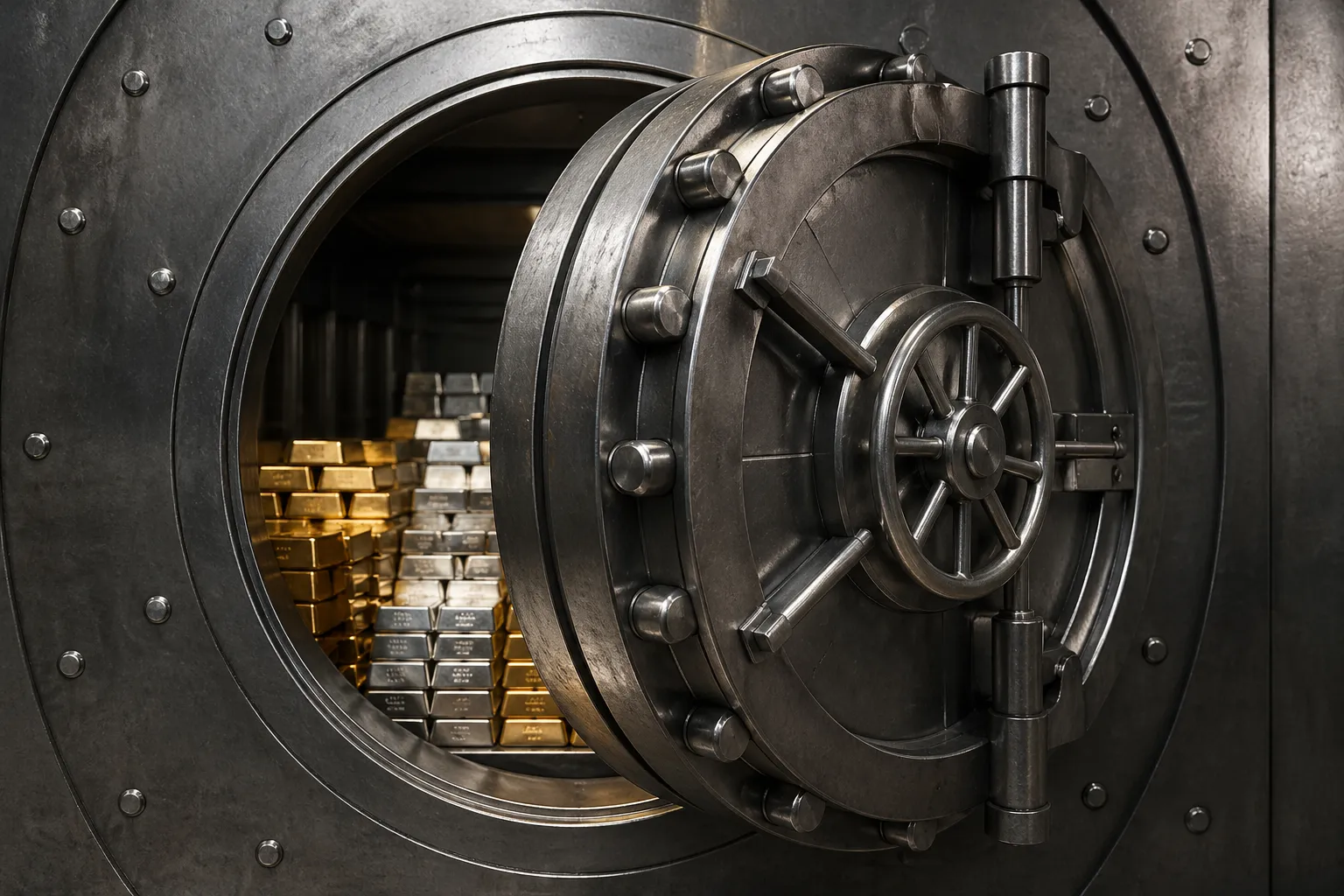
For years, scarcity was simple. Fixed supply meant higher value.
And while that logic still holds, it’s no longer enough on its own.
In 2026, scarcity is being shaped by demand. ETFs and derivatives are expanding access, central banks are accumulating reserves, and industrial use is creating real deficits. Liquidity then decides when any of it actually shows up in price.
Bitcoin didn’t change its supply, gold didn’t suddenly become rarer and silver didn’t suddenly run out. What changed is who is buying, how they’re buying, and why.
Scarcity without demand is just theory. In 2026, the market is pricing both.
₿ Bitcoin: Programmable Scarcity Meets Wall Street Flows
Bitcoin is still the clearest form of absolute scarcity. The 21 million cap is enforced by code, not policy. That hasn’t changed, but what moves the price has.
Spot ETFs saw ~$6.4B in outflows into early 2026, followed by ~$2.5B in inflows in March. Price ran to ~$126K, dropped below $82K, then stabilized. That is not a supply story, that’s a liquidity story.
Bitcoin is now fully financialized, which means it reacts to rate expectations, moves with equities during stress, and is driven by institutional positioning. Hedge funds aren’t treating BTC as digital gold. They’re treating it as a liquid, high-beta asset with upside. The scarcity is fixed, but the price is set in capital markets.
🥇 Gold: Central Banks Are Rewriting the Bid

Gold’s scarcity has always been softer than Bitcoin’s. Supply grows, and there’s no hard cap. Yet in 2026, gold is outperforming. The difference is the buyer.
Central banks are projected to purchase around 850 tonnes this year, matching 2025 levels. That isn’t speculative demand. It’s long-term allocation that doesn’t react to price swings or short-term narratives.
Gold is being accumulated as neutral reserve collateral in a more unstable currency environment. Its scarcity is not absolute, but its buyer base makes it behave like it is.
Join our community of 400K+ and never miss breaking news!
We respect and protect your privacy. By subscribing your info will be subject to our privacy policy . Unsubscribe easily at any time
🥈 Silver: The Industrial Squeeze Nobody Prices Correctly

Silver sits in an awkward middle ground; partly monetary, partly industrial, and that split is exactly why it’s so often mispriced.
This is now the sixth consecutive year of supply deficit, with over half of demand coming from industrial use, particularly EVs and solar. That demand doesn’t disappear just because prices move.
But unlike gold, it’s cyclical. When prices rise, industrial buyers pull back, which softens demand even as deficits persist. That push and pull creates a volatility profile that neither gold nor Bitcoin shares.
Silver isn’t being accumulated as a reserve asset. It’s being consumed, constantly tied to real economic activity. Its scarcity is real, but it behaves differently, making it the most structurally interesting of the three, and often the least understood.
📉 Price Action in 2026: Three Assets, Three Different Jobs
The divergence in 2026 says more than any theory.
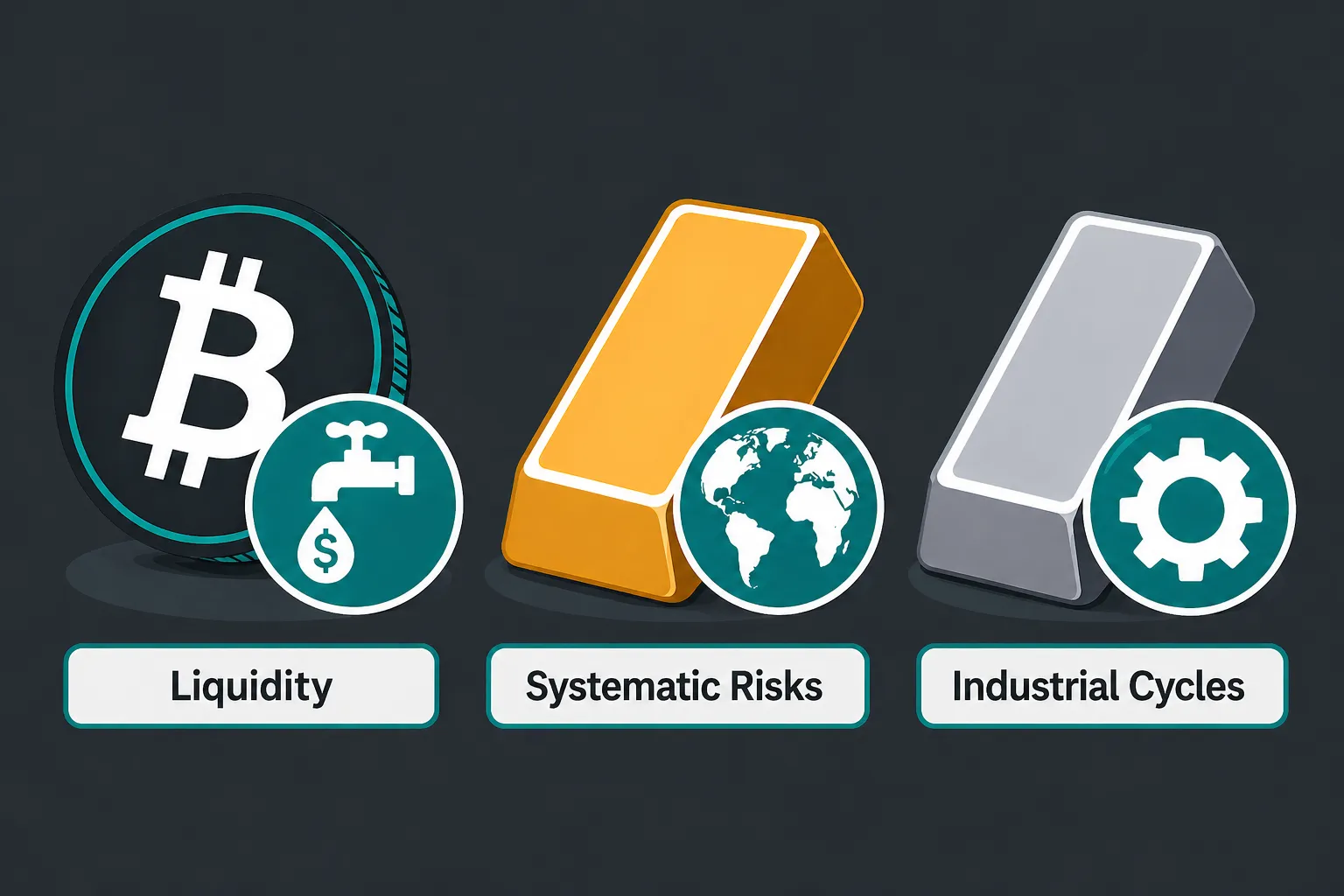
Bitcoin ran from around $75K to a peak near $126K, then pulled back below $82K before stabilizing. Gold pushed above $5,500 before settling closer to $4,650. Silver surged toward $75, then cooled as industrial demand eased. Same macro backdrop, three very different reactions.
That’s because each asset carries a different type of exposure. Bitcoin is tied to liquidity expansion. Gold reflects systemic risk. Silver moves with industrial cycles.
This isn’t a winner-takes-all market, and it never has been, because pattern shows up in every major macro cycle.
The real question isn’t which asset wins, it’s which risk you’re choosing to take.
🏦 Portfolio Positioning: How Serious Money Is Actually Allocating
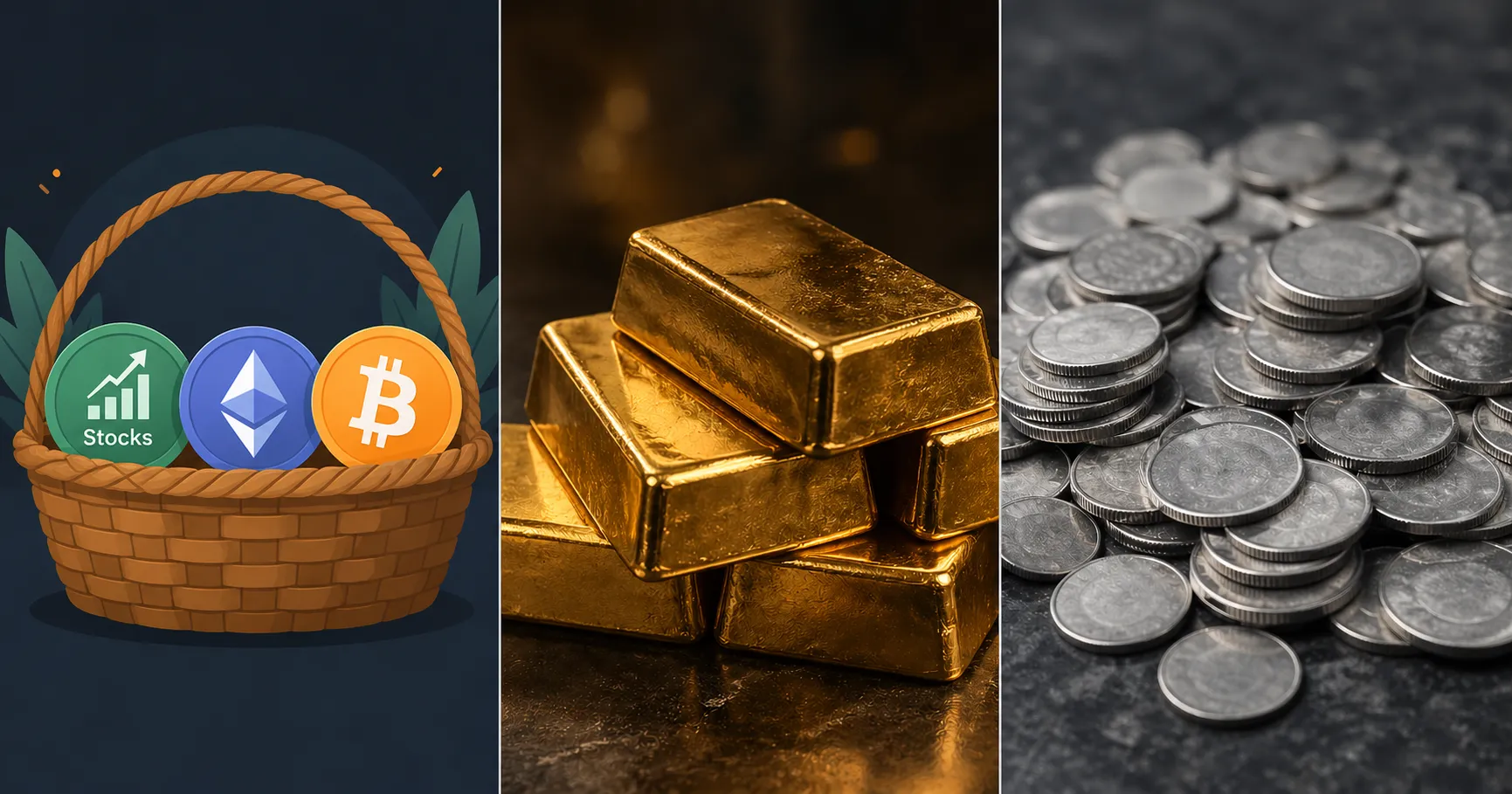
In 2026, capital isn’t choosing one asset. It’s splitting across roles.
Bitcoin is being used through ETFs and derivatives as a high-beta macro trade. Gold is being accumulated by sovereigns as reserve collateral. Silver is traded more tactically, tied to shifts in industrial demand rather than held long-term.
The difference is obvious. Older capital leans on gold, while newer capital leans on Bitcoin. Both are reacting to the same thing: currency debasement and systemic risk.
This was never about Bitcoin replacing gold. It’s about understanding how different forms of scarcity get used, and how smart money positions across all three.
⚖️ The Real Divide: Sovereign Trust vs Code-Based Trust
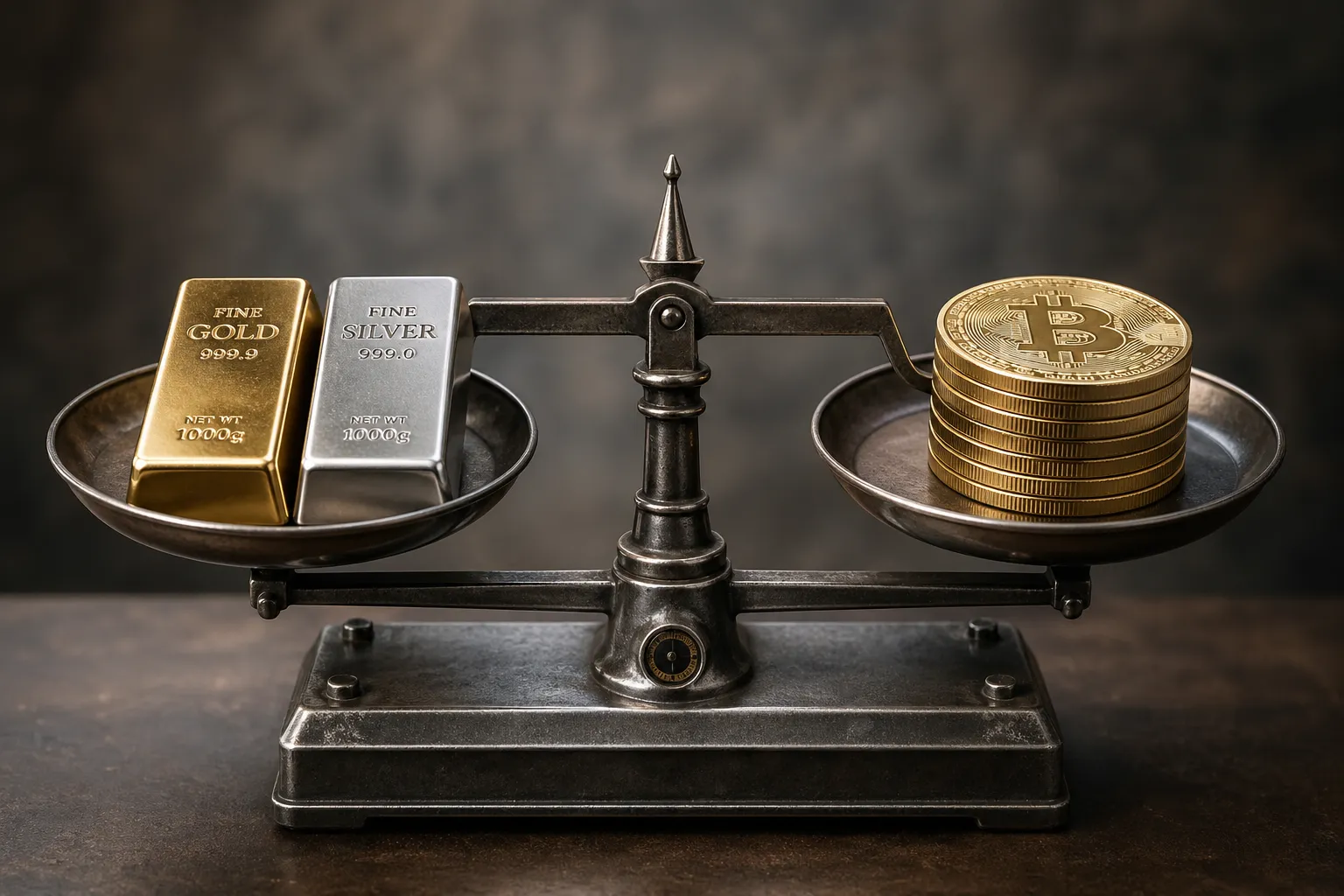
This isn’t just a pricing shift. It’s a shift in what the market trusts.
Gold is anchored by central banks and history. Bitcoin is anchored by code and verifiability. Silver is anchored by real-world demand.
That’s why capital is splitting instead of choosing.
Different assets solve different problems. Sovereigns accumulate gold. Institutions trade Bitcoin. Industry consumes silver.
The market isn’t picking a winner. It’s pricing multiple forms of trust at the same time.
📉 The Bottom Line
The sharp takeaway is this, scarcity alone does not drive value anymore. The structure of demand behind that scarcity is what the market is actually pricing.
Bitcoin, gold, and silver are not competing for the same role. They are competing for relevance in different layers of the financial system.
If you want to track where capital is rotating next, join our Telegram community with 60K+ traders who watch flows in real time. Then subscribe to the DayTrading.co newsletter, because the next repricing move will not wait for headlines.