

Understanding Funding Rates in Perpetual Futures Trading
Get Breaking News First!
Editor’s choice
-
🔐 One Wallet for Everything Is How Most Traders Get Hurt. Here Is How Many You Actually Need
-
💰 Don’t Sell Your Bitcoin – Borrow Against It: The Best Platforms in 2026
-
MetaMask Who? The Web3 Wallets Traders Are Actually Using in 2026
-
💼 When Crypto Trading Becomes a Business: The IRS Rules Every Active Trader Needs to Know
-
₿ Why Local Businesses Are Taking Bitcoin Seriously in 2026
-
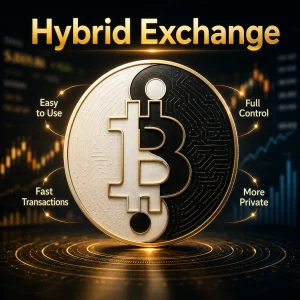
⚡ The Best of Both Worlds: How Hybrid Crypto Exchanges Are Changing the Way We Trade
Most traders obsess over price.
Smart traders watch funding.
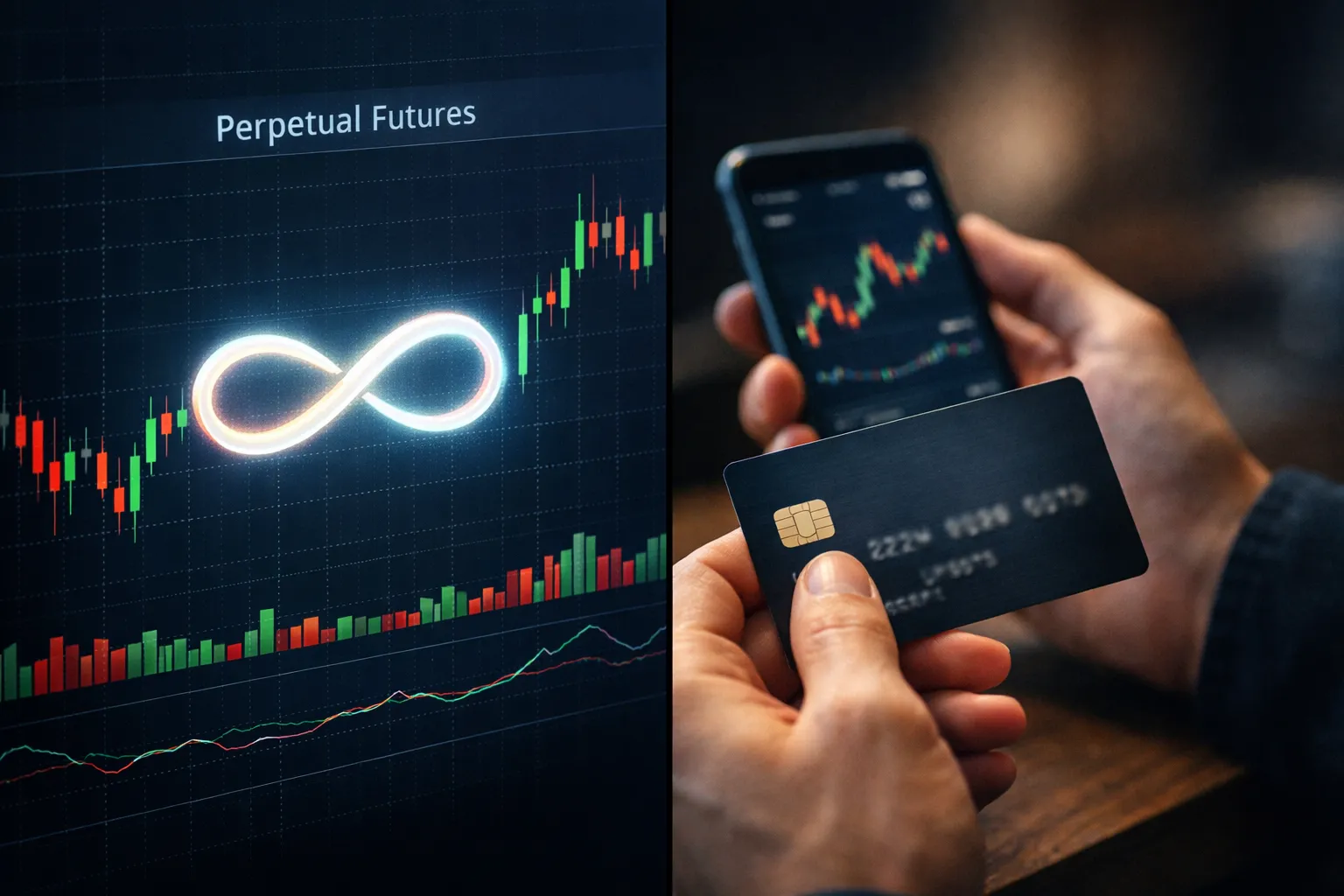
You can be perfectly right on direction and still bleed capital every eight hours. That’s funding – the quiet mechanism keeping perpetual futures tied to spot, and the reason crowded trades get expensive fast.
Join our community of 400K+ and never miss breaking news!
We respect and protect your privacy. By subscribing your info will be subject to our privacy policy . Unsubscribe easily at any time
Let’s break down how funding really works and how to use it instead of fighting it.
🚨 What Are Funding Rates and Why Do They Exist?
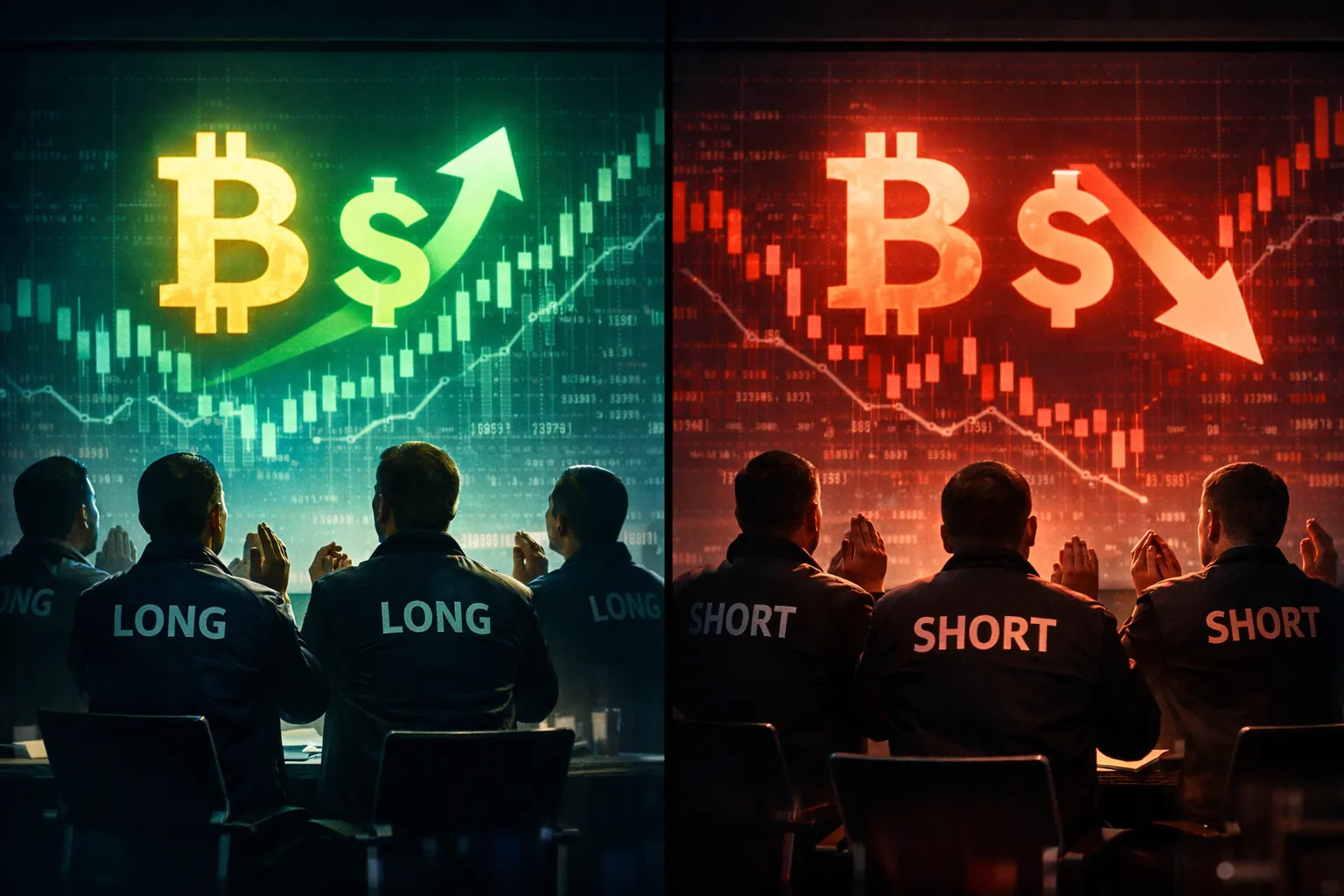
Funding rates are periodic payments built into perpetual futures to keep their price aligned with spot.
Because perps never expire, there’s no natural moment where price snaps back to spot – unlike traditional futures, which settle and converge at expiry. That difference is the whole point of funding (we break this down further in our crypto futures vs perpetuals guide).
If the perpetual contract trades above spot, longs pay shorts. If it trades below spot, shorts pay longs.
It’s trader-to-trader, not an exchange fee. Think of it as the balancing force that keeps perpetual futures usable for speculation and hedging.
Without funding, perpetuals would wander into wild premiums or deep discounts and stop being useful.
💡 How to Calculate Funding Rates
Funding rates are calculated using a simple formula:
Funding Rate = Premium Index + Interest Rate
The premium index measures how far the perpetual contract is trading from spot. If perps are above spot, the premium is positive. If they’re below, it’s negative. Exchanges sample this continuously and smooth it into an average over the funding period.
The interest rate is usually tiny, often around 0.01% per 8 hours, acting as a base cost between long and short positions.
Put them together, and you get the funding rate.
A positive funding rate means longs pay shorts, while a negative one means shorts pay longs.
Join our community of 400K+ and never miss breaking news!
We respect and protect your privacy. By subscribing your info will be subject to our privacy policy . Unsubscribe easily at any time
A near 0% funding rate means neither bulls nor bears have the upper hand.
🧨 The Risks Associated With Funding Rates

Here’s where funding starts to matter.
Funding compounds. Even small percentages add up when you’re holding size.
For example, a 0.03% funding rate every 8 hours on a $10,000 position equals $3 per interval. That’s $9 per day. Hold that position for a week, and you’ve paid $63, without price moving against you.
Now scale that to a $100,000 position, and it’s $630 a week.
Leverage makes this worse. The larger the position, the larger the absolute funding payments.
And funding isn’t uniform. Rates vary across exchanges because premium calculations differ. The same position can cost more on one platform than another.
✅ How to Manage Funding Rate Risks
Funding isn’t random. It’s manageable.
Here’s how traders reduce the damage – or flip it into an edge:
If you want broader discipline rules that keep traders solvent long-term, we’ve outlined additional crypto trading principles here.
🔖 Final Thoughts
Funding isn’t noise. It’s structure.
Track it, price it into your trades, and use it as a signal. Ignore it, and it becomes a tax you didn’t plan for.
📈 Stay Ahead of the Tape
We break down positioning shifts, funding spikes, and derivatives trends in real time inside our Telegram channel.
Join 60k+ traders getting live market alerts – and get deeper strategy breakdowns in our weekly newsletter.
Trade smart. Not blind.